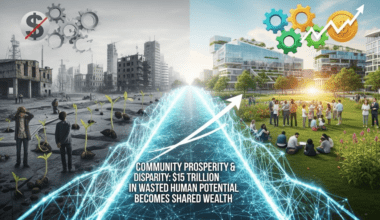
Why 3 Million Unfilled STEM Jobs Represent History’s Greatest Career Opportunity
ACTIVITY 1: The STEM Career Path Assessment
Evaluate your STEM career potential:
Interest Assessment (1-10 scale):
- Solving complex problems: ___
- Understanding how things work: ___
- Working with data/numbers: ___
- Technology and innovation: ___
- Scientific discovery: ___ Interest Score: ___/50
Skills Assessment (1-10 scale):
- Mathematics ability: ___
- Logical/analytical thinking: ___
- Coding/programming: ___
- Scientific method understanding: ___
- Technical writing/communication: ___ Skills Score: ___/50
Preparation Assessment (1-10 scale):
- STEM education completed: ___
- Relevant experience/projects: ___
- Continuous learning habits: ___
- Professional network in STEM: ___
- Certifications/credentials: ___ Preparation Score: ___/50
Your STEM Career Score: ___/150
Interpretation:
- 120-150: Strong STEM career potential – pursue it!
- 90-119: Moderate potential – develop skills, consider STEM
- 60-89: Developing potential – start learning, explore options
- 30-59: Early stage – begin with fundamentals
- Under 30: Build foundation, consider STEM-adjacent roles
STEM Career Paths by Score:
- High (120+): Engineer, data scientist, software developer, research scientist
- Moderate (90-119): Technical writer, lab technician, STEM educator, analyst
- Developing (60-89): IT support, quality assurance, technical sales
- Building (<60): Start with online courses, bootcamps, community college
Time to complete: 15 minutes
Cost: Free
What you learned: Your STEM career readiness and pathway
Here’s the STEM reality: 3 million STEM jobs unfilled globally. Demand growing 8-12% annually. Starting salaries $60,000-90,000 (vs $35,000-45,000 non-STEM). Lifetime earnings premium $500,000-1,000,000. Yet massive shortage persists.
The opportunity: STEM education accessible via online platforms at 80-90% cost savings. EdTech growing 15-30% annually. Anyone can learn STEM skills and capture the premium. $7-14 trillion economic value if gap closed.
STEM shortage = crisis for economy, fortune for those who develop skills.
The Value Proposition: STEM Careers = Financial Security
STEM Salary Premium
Starting Salaries (Bachelor’s Degree):
- Engineering: $65,000-75,000
- Computer Science: $70,000-85,000
- Data Science: $75,000-90,000
- Mathematics/Statistics: $60,000-70,000
- Life Sciences: $50,000-65,000
Compare to Non-STEM:
- Business: $45,000-55,000
- Liberal Arts: $35,000-45,000
- Service industries: $25,000-35,000
Premium: $15,000-50,000 annually at entry level
Mid-Career (10-15 years experience):
- Senior Engineer: $120,000-180,000
- Senior Developer: $130,000-200,000
- Data Scientist: $140,000-220,000
- Research Scientist: $100,000-150,000
Compare to Non-STEM mid-career: $50,000-80,000
Premium: $50,000-140,000 annually mid-career
Lifetime Earnings:
- STEM career: $2.5M-4M
- Non-STEM career: $1.5M-2.5M
- Lifetime premium: $500,000-1,500,000
ROI on STEM Education:
- STEM degree cost: $40,000-100,000
- Lifetime premium: $500,000-1,500,000
- ROI: 500-1,500% (5-15x return)
Plus: STEM careers more recession-resistant, offer remote work flexibility, continuous learning keeps skills valuable.
The STEM Shortage Crisis
Global STEM job openings: 3+ million unfilled positions
By sector:
- Software/IT: 1.5 million unfilled
- Engineering: 800,000 unfilled
- Data Science/Analytics: 500,000 unfilled
- Life Sciences: 200,000 unfilled
Growth projections:
- Software: +22% by 2030 (much faster than average)
- Data Science: +36% by 2030 (explosive growth)
- Engineering: +6% by 2030 (steady demand)
- Healthcare tech: +15% by 2030 (aging population)
Why the shortage?
- Insufficient graduates: Not enough STEM degrees awarded
- Gender gap: Women 50% of population but 25% of STEM workers
- Skills mismatch: Degree doesn’t match job requirements
- Rapid change: Skills obsolete quickly, continuous learning required
- Geographic mismatch: Jobs in cities, workers in suburbs/rural
Economic cost: $7-14 trillion in unrealized GDP globally from unfilled STEM positions (products not built, innovations not created, efficiencies not realized).
Opportunity: Fill the gap = $7-14 trillion economic value creation + millions lifted into middle class.
ACTIVITY 2: The STEM Learning Roadmap
Create your personalized STEM learning path:
Step 1: Choose Focus Area Based on Activity 1 score and interests, select one:
- Software Development (most jobs, highest pay)
- Data Science (fastest growing, analytical)
- Engineering (physical world, design)
- Life Sciences (healthcare, biology)
Your focus: _______________
Step 2: Foundation Skills (Months 1-3)
- Math: Algebra, statistics, calculus basics (Khan Academy free)
- Logic: Problem-solving, algorithms (freeCodeCamp)
- Tools: Learn specific software for your field Time: 10-15 hours/week
Step 3: Core Skills (Months 4-9)
- Software: JavaScript, Python, or Java (freeCodeCamp, Codecademy)
- Data Science: Python, R, SQL, statistics (Coursera, edX)
- Engineering: CAD, technical drawing, domain knowledge
- Life Sciences: Lab techniques, research methods, specific area Time: 15-20 hours/week
Step 4: Projects & Portfolio (Months 10-12)
- Build 3-5 projects demonstrating skills
- Contribute to open source (software)
- Document on GitHub or portfolio site
- Network in online communities (Reddit, Discord, LinkedIn) Time: 20+ hours/week
Step 5: Job Search (Month 12+)
- Apply to 20-50 positions
- Practice technical interviews (LeetCode, HackerRank)
- Leverage network for referrals
- Consider internships if no experience Time: Full-time job search
Expected Timeline: 12-18 months from beginner to employed Cost: €500-2,000 (mostly online courses) Outcome: $60,000-90,000 starting salary
ROI: First year salary pays for entire learning investment 30-100x over
Time to complete: 1 hour to create roadmap
Action: Start learning this week
Commitment: 10-20 hours weekly
The Technology Revolution: STEM Education Democratized
Online Coding Bootcamps
Traditional path: 4-year computer science degree ($40,000-200,000, 4 years full-time).
Bootcamp path: 12-24 week intensive program ($8,000-20,000, 3-6 months).
Outcomes:
- Job placement: 70-80% within 6 months
- Starting salary: $50,000-70,000
- Skills: Job-ready web development, data science, etc.
Major bootcamps:
- freeCodeCamp: Free, self-paced, excellent curriculum
- The Odin Project: Free, comprehensive web development
- App Academy: Pay after you get job (income share agreement)
- Lambda School: Similar income share model
- General Assembly: Traditional paid model
ROI: $15,000 bootcamp → $60,000 job = 400% first-year return. Then $60,000+ annually for decades.
Massive Open Online Courses (MOOCs)
Free/low-cost courses from top universities:
Coursera:
- 5,000+ courses
- Google, IBM, Meta certificates ($39-79/month)
- Specializations: 4-6 courses in focused area
- Master’s degrees: $15,000-25,000 (vs $40,000-120,000 traditional)
edX:
- MIT, Harvard, Berkeley courses
- MicroMasters: Graduate-level credentials
- Professional certificates: Job-focused skills
Udacity:
- “Nanodegrees” in tech skills
- Projects reviewed by professionals
- Career services included
Cost comparison:
- Traditional degree: $40,000-200,000
- Online equivalent: $5,000-25,000
- Savings: 75-95%
Quality: Equivalent or better (same professors, more flexibility, self-paced).
AI-Powered Coding Assistants
Learning to code accelerated by AI:
GitHub Copilot: AI writes code suggestions as you type
- Reduces time to learn by 30-50%
- Makes beginners productive faster
- $10-20/month
ChatGPT/Claude: AI tutors answering questions, explaining concepts, debugging code
- Available 24/7
- Patient (infinite patience)
- Free or $20/month
Result: Learning curve flattened. Anyone can learn to code with AI assistance.
Project-Based Learning Platforms
Traditional education: Lectures + exams (boring, not practical).
Project-based: Build real things while learning (engaging, practical).
Platforms:
- freeCodeCamp: Build 5 projects per certification
- The Odin Project: Full-stack web development by building
- Kaggle: Data science competitions (real datasets)
- Hack Reactor: Bootcamp entirely project-based
Why it works:
- Learn by doing (higher retention)
- Portfolio to show employers
- More engaging/motivating
- Direct skill transfer to job
ACTIVITY 3: The 30-Day Coding Challenge
Start your STEM journey today:
Week 1: Fundamentals
- Day 1-2: Create accounts (freeCodeCamp, GitHub, Stack Overflow)
- Day 3-5: Complete first 10 HTML/CSS lessons (freeCodeCamp)
- Day 6-7: Build simple webpage, host on GitHub Pages
Week 2: JavaScript Basics
- Day 8-10: JavaScript fundamentals (variables, functions, loops)
- Day 11-13: DOM manipulation, make webpage interactive
- Day 14: Build calculator or simple game
Week 3: Applied Skills
- Day 15-17: APIs, fetch data from public APIs
- Day 18-20: Build weather app or similar using API
- Day 21: Refine, debug, add features
Week 4: Portfolio & Community
- Day 22-24: Create portfolio website showcasing projects
- Day 25-27: Join coding communities (Reddit r/learnprogramming)
- Day 28-30: Plan next learning phase, commit to ongoing study
Expected Results:
- 3-5 small projects completed
- Foundation in HTML, CSS, JavaScript
- Portfolio live on internet
- Connected to learning community
- Confidence to continue learning
Share: #30DayCodingChallenge
Time commitment: 1-2 hours daily
Cost: €0 (free resources)
Outcome: Job-ready basics in 30 days, career in 12-18 months
The Crisis Reality: STEM Gender and Racial Gaps
Women in STEM: 25-30% (Should Be 50%)
Pipeline breakdown:
- Girls 50% of population
- High school STEM interest: 40% girls
- STEM majors: 35% women
- STEM careers: 25-30% women
- STEM leadership: 15% women
Why women leave:
- Stereotypes: “Tech is for boys” discourages girls early
- Bias: Women face discrimination, harassment, doubted
- Role models: Few visible women in STEM
- Culture: “Bro culture” unwelcoming to women
- Flexibility: Lack of parental leave, flexible hours
Economic cost: Half of human talent wasted = $2-5 trillion annually in innovation not created.
Solutions that work:
- Early intervention: Encourage girls in STEM from childhood
- Mentorship: Connect women in STEM with girls/young women
- Bias training: Address unconscious bias in hiring, promotion
- Policy: Paid parental leave, flexible work, harassment elimination
- Visibility: Highlight successful women in STEM
ROI: Increasing women in STEM to 50% = $2-5 trillion additional GDP.
Racial Gaps in STEM
STEM workforce racial breakdown (US example):
- White: 67% (vs 60% of population) – overrepresented
- Asian: 18% (vs 6% of population) – highly overrepresented
- Hispanic: 8% (vs 19% of population) – severely underrepresented
- Black: 7% (vs 13% of population) – underrepresented
Causes:
- Education access: Lower-quality schools in minority communities
- Economic barriers: Can’t afford STEM degrees, bootcamps
- Networks: Less access to STEM mentors, role models
- Bias: Discrimination in hiring, advancement
Cost: Massive talent wasted, innovation lost, inequality perpetuated.
Solutions:
- Scholarship programs: Remove financial barriers
- Pipeline programs: Outreach to minority students early
- HBCUs: Support historically Black colleges in STEM
- Mentorship: Connect minority students with professionals
- Bias elimination: Blind resume screening, diverse hiring panels
Impact: Proportional STEM representation = $1-3 trillion additional GDP from unleashed talent.
ACTIVITY 4: The STEM Investment & Career Strategy
Position for STEM boom:
Career Investment (Yourself):
Option 1: Bootcamp ($8K-20K, 3-6 months)
- Fast track to job
- Income share agreements available (pay after employed)
- ROI: 300-700% first year
Option 2: Online Courses ($0-5K, 6-12 months)
- Self-paced, flexible
- Nearly free (freeCodeCamp, Khan Academy)
- ROI: Infinite (near-zero cost)
Option 3: Community College ($5K-15K, 2 years)
- Associate’s in STEM
- Transfer to 4-year university or enter workforce
- ROI: 200-500% over career
Option 4: Traditional Degree ($40K-100K, 4 years)
- Most comprehensive
- Strong network, credentials
- ROI: 500-1,500% over career
Financial Investment (Portfolio):
1. EdTech Companies (15-30% returns)
- Coursera, Udemy, Duolingo (some public)
- Expected growth: 15-25% annually
2. Tech Companies (10-25% returns)
- Always need STEM talent
- Google, Microsoft, Apple, others
- Expected growth: 8-15% annually
3. STEM-Heavy Sectors (10-20% returns)
- Biotechnology, clean energy, AI companies
- Expected growth: 10-20% annually
Sample Portfolio:
- 40%: Invest in own STEM education (highest ROI)
- 30%: EdTech stocks (sector growth)
- 20%: Tech companies (stable growth)
- 10%: Emerging STEM sectors (high risk/reward)
10-Year Projection: €10,000 in self + investments @ 20% average = €61,917
Plus lifetime earnings premium: €500K-1.5M
Time to complete: 30 minutes
Action: Choose education path + invest in STEM sectors
Expected return: 300-1,500% on education, 10-30% on financial investments
ACTIVITY 5: The STEM Commitment Contract
Commit to STEM learning:
I, _____________, commit to developing STEM skills.
My Starting Point:
- STEM career score: ___/150 (from Activity 1)
- Current STEM skills: _______________
- Target career: _______________
My 12-Month Goals:
- Complete ___ courses/certifications
- Build ___ portfolio projects
- Learn ___ programming languages/tools
- Network with ___ STEM professionals
- Apply to ___ STEM positions
My Learning Plan:
- Daily: ___ hours learning (minimum 1 hour)
- Weekly: ___ hours projects (minimum 5 hours)
- Monthly: Complete ___ course module(s)
- Resources: _______________ (freeCodeCamp, Coursera, etc.)
My Investment:
- Time: ___ hours weekly
- Money: €___ for courses/tools
- Expected ROI: ___% (300-1,500%)
My Accountability:
- Partner: _______________
- Weekly: Share progress, projects
- Monthly: Review goals, adjust plan
- Public: Share #STEMLearningJourney
My Why: [Write reason – career, income, security, interest, impact]
Expected 12-Month Outcomes:
- Skills: Job-ready in chosen STEM field
- Portfolio: 3-5 projects demonstrating competence
- Network: Connected to STEM community
- Job: Employed in STEM at $60K-90K starting
Date: ______ Signature: ______
Time to complete: 15 minutes
Impact: Career transformation + financial security
The Bottom Line: STEM Skills = Economic Security in 2050
The 21st century economy runs on STEM. Every major challenge (climate, health, infrastructure, resources) requires STEM solutions. STEM workers needed, paid premium, and insulated from automation.
The value propositions:
- STEM careers: $60K-90K starting, $100K-200K+ mid-career
- Lifetime premium: $500K-1.5M over non-STEM
- STEM education ROI: 500-1,500% (5-15x return)
- Online learning: 80-90% cheaper than traditional
- Bootcamps: Job-ready in 3-6 months
- EdTech investing: 15-30% annual returns
The crisis is real:
- 3 million STEM jobs unfilled globally
- $7-14 trillion economic loss from shortage
- Women 25-30% of STEM (should be 50%) = $2-5T lost
- Racial underrepresentation = $1-3T lost
- Rapid obsolescence requires continuous learning
The solution:
- Universal STEM education: Every child learns coding, math
- Close gender/racial gaps: Unleash full talent pool
- Online learning: Democratize access
- Continuous upskilling: Lifelong learning culture
- Anyone can learn: Age, background no barrier with online resources
STEM skills are 21st century literacy. Learn them and thrive. Ignore them and struggle.
💻🔬📊