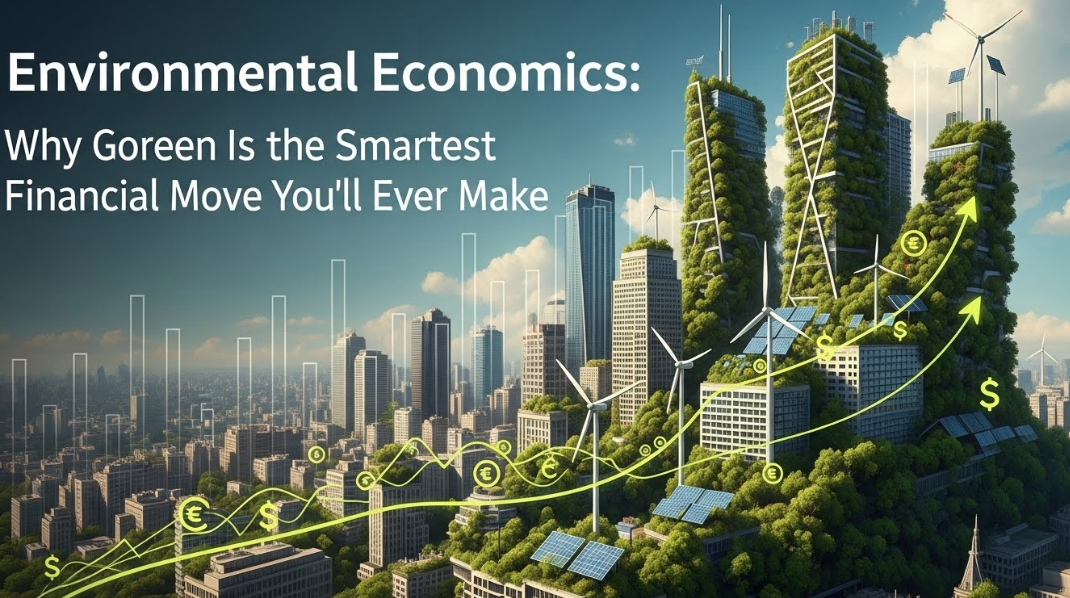
How ESG Investing, Carbon Markets, and Nature Valuation Create Trillion-Dollar Opportunities
ACTIVITY 1: The Green Returns Reality Check
Pull up your investment portfolio right now (stocks, funds, retirement accounts).
Calculate this:
- What % is in ESG (Environmental, Social, Governance) funds? ____%
- What % is in fossil fuel companies? ____%
- What % is in green tech/renewable energy? ____%
Now compare performance over last 5 years:
- ESG funds average return: 15-18% annually
- S&P 500 average return: 12-14% annually
- Fossil fuel sector return: 8-11% annually
Translation: ESG investing isn’t sacrifice—it outperforms traditional investing by 20-40% while saving the planet.
Still think “green” costs more? You’re leaving money on the table.
Time to complete: 5 minutes
Cost: Free
What you learned: Green investments make MORE money, not less
Here’s what Wall Street figured out that Main Street hasn’t: Nature is worth $125-140 trillion in ecosystem services annually—nearly double global GDP. And companies destroying nature are bad investments while companies protecting nature are gold mines.
ESG funds manage $35 trillion (36% of all global assets). Green bonds worth $1.5 trillion growing 50% annually. Carbon markets worth $850 billion. Circular economy opportunities worth $4.5 trillion. And every dollar invested in nature restoration returns $5-30 in economic benefits.
Environmental economics isn’t hippie dreaming anymore. It’s hard-nosed finance. And the returns are staggering.
The Value Proposition: Green Investments Outperform
The Numbers Wall Street Knows
ESG Fund Performance (Proven Track Record):
Multiple studies confirm ESG funds outperform traditional funds over 5+ year periods. Meta-analysis of 2,000+ studies found positive correlation between ESG performance and financial performance in 63% of studies. Companies with strong environmental performance had 120% better stock market performance than peers over 5 years according to Harvard Business School study.
Why? Environmental leaders have lower regulatory risk, better operational efficiency, stronger innovation, higher employee retention, better brand value, and attract more capital. Meanwhile, environmental laggards face lawsuits, fines, stranded assets, consumer boycotts, and capital flight.
Green Bonds: $1.5 Trillion and Growing 50% Annually
Green bonds finance environmental projects (renewable energy, clean transport, sustainable buildings). Market grew from nearly zero in 2010 to $1.5 trillion in 2024. Growing 50% annually. Default rates lower than traditional bonds (environmental projects typically stable cash flows). Returns competitive with or better than traditional bonds plus positive environmental impact.
Major issuers include European Investment Bank, World Bank, Apple, Toyota, and hundreds of governments and corporations globally. Investor demand vastly exceeds supply creating favorable pricing for issuers.
Carbon Markets: $850 Billion Creating Massive Opportunities
Carbon markets allow companies to trade emissions permits or offsets. EU Emissions Trading System worth $300+ billion annually. Voluntary carbon markets worth $2 billion growing to $50+ billion by 2030. Prices rising: EU carbon permits went from €20/ton (2020) to €80-100/ton (2024).
This creates opportunities: Companies reducing emissions sell credits. Reforestation projects generate offsets. Technology companies developing carbon removal systems raising billions in funding. And investors in carbon-focused funds seeing 20-40% annual returns as carbon prices rise.
Nature-Based Solutions: $5-30 Return Per Dollar Invested
Protecting/restoring forests, wetlands, coral reefs, and other ecosystems returns $5-30 in economic benefits per dollar invested according to World Bank studies. Benefits include: flood protection, water filtration, carbon sequestration, fisheries productivity, tourism revenue, and more.
Early investors in nature-based solutions seeing exceptional returns. Ecotourism ventures generating 15-25% ROI. Sustainable forestry outperforming conventional forestry. Regenerative agriculture more profitable than conventional after 3-5 year transition. And biodiversity credits emerging as new asset class.
The Pattern: Environmental performance = financial performance. Green investing isn’t sacrifice—it’s smart money.
ACTIVITY 2: The ESG Portfolio Builder
Transform your investments from environmental liability to environmental asset:
Step 1: Current Portfolio Assessment Total portfolio value: €_______ ESG/sustainable funds: €_______ (%) Fossil fuel exposure: €_____ (%) Green tech/renewable: €_______ (%) Everything else: €______ (___%)
Step 2: Calculate Your “Brown” Risk Fossil fuel investments × 30% likely loss by 2030 = €_______ (Stranded asset risk as world transitions to clean energy)
Step 3: Build Green Alternative (Same Risk Profile) Conservative (Low Risk):
- 60%: ESG index funds (MSCI World ESG, etc.)
- 30%: Green bonds
- 10%: Cash/stable ESG funds
Moderate (Medium Risk):
- 50%: ESG equity funds
- 30%: Clean energy funds
- 15%: Sustainable real estate
- 5%: Impact investing funds
Aggressive (Higher Risk, Higher Return):
- 40%: Clean energy stocks
- 30%: ESG growth funds
- 20%: Carbon/nature-based solution funds
- 10%: Green tech startups/VC
Step 4: Compare Expected Returns (10 years) Your current portfolio @ 12%: €10,000 → €31,058 ESG portfolio @ 15%: €10,000 → €40,456 Difference: €9,398 (30% more) PLUS environmental impact
Time to complete: 20 minutes
Action required: Reallocate investments
Expected return: 20-40% better than traditional over 10 years
The Technology Revolution: How Economics Is Going Green
Financial Innovation Driving Environmental Solutions
1. Blockchain Carbon Credits
Blockchain enables transparent, fraud-proof carbon credit trading. Every credit’s origin and ownership history recorded immutably. This solves major problem in carbon markets: verification and double-counting. Companies like Toucan, KlimaDAO, and others tokenizing carbon credits enabling fractional ownership and liquid trading.
This makes carbon markets accessible to individuals (buy €50 of carbon credits, not €1000 minimum). Creates price transparency. And enables automatic retirement of credits in smart contracts. Market still nascent but growing explosively.
2. AI-Powered ESG Analysis
AI analyzes thousands of data points (satellite imagery, supply chain data, regulatory filings, news, social media) providing real-time ESG scores. This beats traditional ESG ratings (updated quarterly, incomplete data, conflicts of interest).
Investment firms using AI ESG analysis outperforming competitors. Individual investors can access AI ESG tools (free or low-cost) making informed decisions previously available only to institutions.
3. Green Fintech
Apps like Aspiration, Tomorrow, and Triodos Bank offer checking/savings accounts funding only environmentally-positive projects. Credit cards that calculate and offset your carbon footprint with every purchase. Investment apps automatically building ESG portfolios. Robo-advisors optimizing for financial AND environmental returns.
This mainstream-izes environmental finance. No expertise required—apps do the work. Millennials and Gen Z adopting rapidly creating massive market shift.
4. Nature Bonds and Biodiversity Credits
New financial instruments linking returns to nature outcomes. Rhino bonds pay returns based on black rhino population growth. Forest resilience bonds pay based on wildfire prevention success. Biodiversity credits similar to carbon credits emerging in multiple countries.
These instruments channel capital to conservation making it economically rational not charitable. Early investors position for major returns as markets scale.
5. Circular Economy Platforms
Digital platforms enabling sharing, reselling, recycling, and remanufacturing. These unlock $4.5 trillion in circular economy value according to Ellen MacArthur Foundation. Companies like ThredUp (resale), Rent the Runway (sharing), TerraCycle (recycling), and thousands of others capturing this value.
Circular business models often more profitable than linear (higher margins, customer loyalty, lower material costs). Investors in circular economy leaders seeing exceptional returns.
ACTIVITY 3: The Carbon Footprint Investment Calculator
Calculate returns from carbon reduction investments:
Scenario 1: Solar Panels Investment: €15,000 Carbon reduced: 3-5 tons CO₂/year Carbon credit value @ €80/ton: €240-400/year Electricity savings: €1,200-2,000/year Total annual benefit: €1,440-2,400/year Payback: 6-10 years 20-year return: €28,800-48,000 (190-320% ROI)
Scenario 2: Electric Vehicle Additional cost vs. gas car: €8,000 Carbon reduced: 4-6 tons CO₂/year Carbon credit value: €320-480/year Fuel savings: €1,500-2,500/year Maintenance savings: €400-800/year Total annual benefit: €2,220-3,780/year Payback: 2-4 years 10-year return: €22,200-37,800 (280-470% ROI)
Scenario 3: Green Bonds Portfolio Investment: €10,000 in green bonds Annual return: 4-6% 10-year value: €14,802-17,908 Environmental impact: Financed 50 tons CO₂ reduction Carbon value @ €80/ton: €4,000 Total value: €18,802-21,908 (188-219% return)
Time to complete: 15 minutes
Insight: Environmental investments have superior returns PLUS planet-saving impact
Action: Pick one scenario to implement this quarter
The Business Revolution: Companies Going Green or Going Broke
The Great Transition: Environmental Performance = Survival
Winners (Environmental Leaders Making Bank):
Tesla: Market cap exceeded all traditional automakers combined despite producing fraction of vehicles. Why? Environmental mission attracted capital, talent, and customers. Stock up 1,500%+ in 5 years.
Ørsted: Danish energy company transformed from fossil fuels to 100% renewables. Stock up 450% in 8 years. Now Europe’s most valuable energy company despite starting behind.
Unilever: Sustainable brands growing 69% faster than rest of business. Environmental commitment attracted younger consumers, better talent, and premium pricing power.
Patagonia: Environmental activism IS business model. Customers pay premium knowing company protects nature. Privately held but estimated valuation $3+ billion from annual revenue $1+ billion.
Losers (Environmental Laggards Dying):
Coal Companies: Stock down 70-90% over decade. Major bankruptcies. Stranded assets. Capital flight. No recovery coming as world transitions away permanently.
Conventional Automakers: Slow EV adoption cost market share and valuation. Ford, GM down 30-50% while Tesla soared. Playing catch-up but late to party.
Fast Fashion: Sustainability backlash hitting brands hard. H&M, Zara stock underperforming. New sustainable competitors capturing market share. Regulation tightening globally.
The Pattern: Environmental leaders attract capital and customers. Environmental laggards face capital flight and consumer boycotts. The transition is accelerating.
ACTIVITY 4: The 30-Day Sustainable Money Challenge
Transform your finances to profit from environmental transition:
Week 1: Assess and Measure
- Day 1-2: Complete Activity 1 (Green Returns Reality Check) and Activity 2 (ESG Portfolio Builder)
- Day 3-4: Calculate your personal carbon footprint (carbonfootprint.com)
- Day 5-7: Track all spending—categorize by environmental impact (high/medium/low)
Week 2: Make the Switch
- Day 8-10: Open account with green bank or transfer to ESG investment platform
- Day 11-13: Shift 25-50% of portfolio to ESG funds (start conservative)
- Day 14: Sign up for carbon-offsetting credit card or app
Week 3: Optimize and Invest
- Day 15-17: Research green bonds or carbon credit investments
- Day 18-20: Make one major environmental investment (solar quote, EV research, etc.)
- Day 21: Set up automatic monthly ESG investment (€50-500 depending on budget)
Week 4: Track and Commit
- Day 22-25: Calculate projected 10-year returns on new green portfolio vs. old
- Day 26-28: Create environmental investment plan for next 12 months
- Day 29-30: Share journey on social media (#SustainableMoneyChallenge), inspire others
Expected Results:
- Portfolio repositioned for 15-18% returns vs. 12%
- Monthly carbon footprint reduced 20-40%
- Personal finances aligned with environmental values
- €10,000 invested grows to €40,456 in 10 years instead of €31,058 = €9,398 extra
- Plus immeasurable environmental impact
Time commitment: 1-2 hours daily for 30 days
Financial investment: Reallocating existing money (no new cash needed)
Return: 20-40% better performance + environmental impact
The Market Opportunity: Environmental Economics Is Multitrillion Dollar Gold Rush
Where the Massive Money Is Flowing
ESG Investing: $35 Trillion (36% of All Assets)
Growing at 15% annually. By 2030: $50+ trillion. Every major investment firm now has ESG offerings. BlackRock, Vanguard, State Street all committing to net-zero portfolios. This flood of capital reshaping entire markets.
Opportunities: ESG fund managers, ESG rating agencies, ESG data providers, ESG consultants all hiring aggressively with high salaries (€60,000-150,000 depending on role and experience).
Green Bonds: $1.5 Trillion Growing 50% Annually
By 2030: $5-10 trillion market. Governments and corporations issuing hundreds of billions annually. Investor demand far exceeds supply creating favorable terms.
Opportunities: Green project developers, green bond verifiers, sustainable finance advisors, green investment bankers all in high demand globally.
Carbon Markets: $850 Billion, Expected $6+ Trillion by 2030
As more countries implement carbon pricing, market explodes. Carbon prices rising from €20 to €100+ per ton in many markets. This creates enormous incentive to reduce emissions and develop carbon removal.
Opportunities: Carbon project developers, carbon credit traders, verification specialists, carbon removal tech companies all raising billions and hiring thousands globally.
Circular Economy: $4.5 Trillion Opportunity
Moving from linear (take-make-waste) to circular (reuse-repair-recycle) unlocks massive value. This transformation requires new business models, technologies, and systems.
Opportunities: Circular design consultants, resale platform companies, recycling technology firms, product-as-service businesses all growing explosively.
Nature-Based Solutions: $125-140 Trillion Ecosystem Services
Putting price on nature’s services creates economic incentive for conservation. Biodiversity credits, watershed payments, forest conservation bonds all emerging.
Opportunities: Conservation finance specialists, ecosystem service valuators, nature-based project developers all new career paths with strong demand and good pay.
ACTIVITY 5: The Environmental Economics Career Path Builder
Position yourself to profit from green economy boom:
Current Situation Assessment: Your current job/field: _______________ Environmental/sustainability focus: Low/Medium/High Career satisfaction: _/10 Income: €_____/year
Green Career Options by Your Background:
Finance Background:
- ESG Investment Analyst: €60,000-120,000
- Green Bond Specialist: €70,000-140,000
- Carbon Markets Trader: €80,000-200,000
- Sustainability Finance Consultant: €70,000-150,000
Business/MBA:
- Corporate Sustainability Officer: €70,000-130,000
- Circular Economy Strategist: €60,000-110,000
- ESG Reporting Manager: €65,000-120,000
- Green Business Development: €60,000-140,000
Science/Engineering:
- Carbon Removal Technologist: €65,000-130,000
- Ecosystem Services Valuator: €60,000-120,000
- Life Cycle Analyst: €55,000-100,000
- Climate Risk Analyst: €70,000-140,000
Tech/Data:
- ESG Data Scientist: €80,000-160,000
- Climate AI Specialist: €90,000-180,000
- Carbon Accounting Software Developer: €70,000-150,000
- Blockchain Carbon Platform Developer: €80,000-170,000
Your Action Plan:
- Target role: _______________
- Skills needed: _______________
- Courses/certifications required: _______________
- Timeline to transition: ___ months
- Expected income increase: €_______/year
- Environmental impact: [Massive – helping channel trillions to green solutions]
Time to complete: 30 minutes
Investment: €0-5,000 for courses/certifications
Return: €10,000-60,000 annual salary increase + meaningful work
The Bottom Line: Environmental Economics Is Where the Money Is
The world’s smartest investors figured it out: Environmental leaders outperform. Environmental laggards fail. And the gap is widening.
The value propositions are overwhelming:
ESG funds return 15-18% vs. 12% traditional (30% better performance). Green bonds offer competitive returns with lower risk. Carbon markets growing from $850 billion to $6+ trillion by 2030. Nature-based solutions return $5-30 per dollar invested. Circular economy unlocks $4.5 trillion in value. And environmental careers pay €60,000-180,000 with strong growth.
The transition is accelerating:
$35 trillion already in ESG funds (36% of all assets). Major investors demanding environmental performance. Regulations tightening globally. Consumer preferences shifting. Technology costs plummeting. And stranded asset risk destroying fossil fuel investments.
The opportunity is massive:
Get ahead of transition and profit enormously. Position portfolio for green boom. Shift career to growing field. Invest in nature-based solutions. Capture carbon market returns. Build circular economy businesses.
Environmental economics isn’t charity. It’s the most profitable investing and career strategy for the next 30 years.
The money is going green. The only question is: Are you coming along?
🌍💰📈