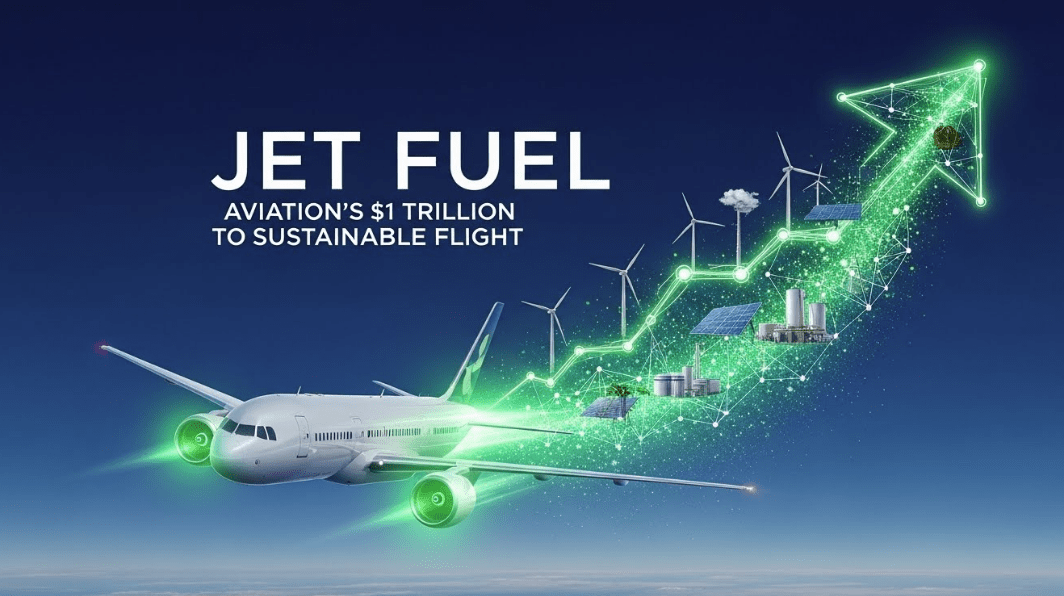
Why SAF, Electric, and Hydrogen Aircraft Create Carbon-Neutral Skies by 2050
ACTIVITY 1: Your Aviation Carbon Footprint
Calculate your flying emissions:
Annual Flights:
- Short-haul (<1,500km): ___ flights × 200kg CO₂ = ___kg
- Medium-haul (1,500-4,000km): ___ flights × 500kg CO₂ = ___kg
- Long-haul (>4,000km): ___ flights × 1,500kg CO₂ = ___kg
Total Annual Aviation Emissions: ___kg CO₂
Context:
- Average person globally: 1,000kg CO₂ from flying
- Frequent flyer (10+ flights): 5,000-10,000kg CO₂
- One transatlantic flight: ~1,500kg CO₂ (1.5 tons!)
Your aviation % of total footprint: ___kg flying / ___kg total = ___%
Reduction strategies:
- Reduce flights: Video calls, train alternatives
- Offset emissions: €20-50 per flight
- Pay SAF premium: €30-100 per flight
- Support aviation transformation
Reality: Aviation 2-3% of global emissions but 10-50% of many individuals’ footprints. Must transform.
Time to complete: 15 minutes
Cost: Free
What you learned: Flying likely significant part of your footprint
Here’s aviation reality: 2-3% of global emissions, growing 4-5% annually pre-COVID. Battery aircraft only viable <500km (tiny fraction). Hydrogen aircraft 2035-2045. Sustainable Aviation Fuel (SAF) = near-term solution. Currently 0.2% of fuel, needs to be 50%+ by 2050. $1T+ market opportunity.
The transformation pathway:
- 2025-2030: SAF scaling (2% → 10%)
- 2030-2040: Electric short-haul + more SAF (10% → 30%)
- 2040-2050: Hydrogen medium-haul + SAF (30% → 70%+ combined)
Aviation can decarbonize. But requires massive investment + higher ticket prices (10-30% initially).
The Value Proposition: Sustainable Aviation = Essential
The Aviation Decarbonization Challenge
Why aviation hard to decarbonize:
Energy density requirements:
- Jet fuel: 12,000 Wh/kg (very energy-dense)
- Best batteries: 250-300 Wh/kg (40-50x WORSE!)
- Hydrogen: 33,000 Wh/kg (better than jet fuel but cryogenic challenges)
Weight penalties:
- Every kg of aircraft weight requires fuel to lift it
- Heavy batteries = more batteries needed = death spiral
- Physics limits battery aircraft to <500km range
Long distances:
- NYC-London: 5,500km (9-10 hours flying)
- Battery aircraft: Impossible
- Hydrogen: Possible but requires new aircraft
- SAF: Drop-in replacement (works in existing aircraft)
Fleet turnover:
- Aircraft last 20-30 years
- Can’t replace entire fleet quickly
- Need solutions for existing aircraft = SAF
Sustainable Aviation Fuel (SAF) Economics
Current SAF production:
- 600 million liters annually (2025)
- 0.2% of global jet fuel
- Costs $3-5/liter vs $0.60-1.00 conventional (3-8x premium)
Projected SAF scaling:
- 2030: 20-30 billion liters (6-10%)
- 2040: 150+ billion liters (30-50%)
- 2050: 300+ billion liters (>50%)
Cost trajectory:
- 2025: $3-5/L (large premium)
- 2030: $1.50-2.50/L (smaller premium)
- 2035: $1.00-1.50/L (parity!)
- 2040+: Potentially cheaper (if carbon priced)
Investment opportunity:
- SAF producers: 20-40% returns (Neste, Gevo, LanzaJet)
- Feedstock companies: 12-20% returns
- Infrastructure: 10-15% returns
- $1T market by 2050
Ticket price impact:
- 2025: +20-50% if 100% SAF (but <1% SAF use)
- 2030: +10-20% for 10% SAF blend
- 2035: +5-10% as costs drop
- 2040+: Minimal premium at parity
Electric Aircraft: Short-Haul Revolution
Technology:
- Battery-powered motors
- Range: 200-500 km realistically
- Passengers: 9-50 (small regional aircraft)
- Timeline: 2028-2035 commercial deployment
Routes suitable:
- San Francisco-Los Angeles (550km)
- London-Paris (450km)
- Sydney-Melbourne (700km, borderline)
- ~20-30% of flights globally under 500km
Economics:
- Aircraft cost: Higher upfront (batteries expensive)
- Operating cost: 50-70% lower (electricity cheap, simple maintenance)
- Total cost: Competitive by 2030s
Companies:
- Heart Aerospace (Sweden): ES-30, 30-passenger
- Eviation (Israel): Alice, 9-passenger
- ZeroAvia (UK/US): Hydrogen-electric hybrid
Market: $50-100B by 2040
Hydrogen Aircraft: Medium-Haul Future
Technology:
- Liquid hydrogen fuel (cryogenic, -253°C)
- Fuel cells or hydrogen combustion
- Range: 2,000-4,000km
- Timeline: 2035-2045 commercial
Challenges:
- Cryogenic storage (complex, expensive)
- Hydrogen production/distribution infrastructure
- New aircraft designs needed (can’t retrofit)
- Safety concerns (hydrogen combustible)
But solvable:
- Aviation already handles cryogenic liquids (liquid oxygen)
- Hydrogen energy density excellent
- Zero emissions (only water vapor)
Airbus commitment:
- 3 hydrogen aircraft concepts
- Commercial service by 2035 goal
- 100-200 passenger capacity
Market potential: $200-400B by 2050
ACTIVITY 2: The Aviation Choice Calculator
Compare flight options:
Flight: Your City → Destination (___km)
Option 1: Conventional Flight
- Cost: €___
- Emissions: ___kg CO₂
- Time: ___ hours
Option 2: SAF-Powered Flight (when available)
- Cost: €___ (+20-50% currently)
- Emissions: ___kg CO₂ (70-85% reduction)
- Time: ___ hours (same)
Option 3: Train (if available, <1,000km)
- Cost: €___ (often similar)
- Emissions: ___kg CO₂ (80-90% less)
- Time: ___ hours (longer but productive)
Option 4: Don’t Fly
- Cost: €0
- Emissions: 0
- Alternatives: Video call, skip trip, combine trips
Your Choice Ranking:
Annual Impact if Reducing Flights 50%:
- Emissions saved: ___kg CO₂
- Money saved: €___
- Carbon value: €___ @ €50/ton
Time to complete: 20 minutes
Action: Reduce flights, choose SAF when available
Expected impact: 1-3 tons CO₂ reduced annually
The Technology Revolution: Multiple Pathways
SAF Production Pathways
1. HEFA (Hydroprocessed Esters and Fatty Acids):
- Feedstock: Used cooking oil, animal fats, plant oils
- Maturity: Commercial, 70% of current SAF
- Cost: $3-5/L (2025) → $2-3/L (2030)
- Scalability: Limited (feedstock constrained)
2. Fischer-Tropsch (FT):
- Feedstock: Biomass, municipal waste, captured CO₂
- Process: Gasification → synthesis → refining
- Cost: $4-6/L (2025) → $2-3/L (2030) → $1.50/L (2040)
- Scalability: High (abundant feedstock)
3. Alcohol-to-Jet (AtJ):
- Feedstock: Ethanol from crops/cellulose
- Process: Ethanol → oligomerization → refining
- Cost: $3-5/L (2025) → $2/L (2030)
- Scalability: Medium-high
4. Power-to-Liquid (PtL) / E-Fuels:
- Process: Renewable electricity → H₂ → + CO₂ → synthetic fuel
- Cost: $6-10/L (2025) → $3-5/L (2030) → $1.50-2.50/L (2040)
- Scalability: Unlimited (just need renewable electricity + captured CO₂)
- Long-term winner if costs drop
Electric Aircraft Innovations
Battery improvements needed:
- Current: 250 Wh/kg
- 2030 target: 400-500 Wh/kg
- 2040 target: 600-800 Wh/kg
- Each doubling = 2x range or 50% more payload
Hybrid-electric:
- Batteries + small turbine generator
- Extends range to 800-1,200km
- Bridge technology
Distributed propulsion:
- Multiple small electric motors along wing
- More efficient than few large engines
- Enables new aircraft designs
Hydrogen Infrastructure Challenges
Production:
- Need green hydrogen (renewable electricity)
- Current: 99% gray hydrogen (from natural gas)
- Cost: $5-7/kg (2025) → $1.50-2.50/kg (2030)
Distribution:
- Cryogenic hydrogen (-253°C)
- Special tankers, pipelines needed
- Airport infrastructure: €50-200M per major airport
- Chicken-egg problem: Infrastructure vs aircraft
Storage on aircraft:
- Liquid hydrogen 4x volume of jet fuel (for same energy)
- Requires larger fuselage or different design
- Weight advantage offsets volume disadvantage
ACTIVITY 3: The 30-Day Conscious Flying Challenge
Transform aviation habits:
Week 1: Awareness
- Day 1-3: Complete Activity 1 (aviation footprint)
- Day 4-5: Track all planned flights next 12 months
- Day 6-7: Identify 1-3 flights to eliminate
Week 2: Alternatives
- Day 8-10: Research train alternatives for <1,000km flights
- Day 11-13: Set up video conferencing for business travel
- Day 14: Commit to reducing flights ___% this year
Week 3: Offset & SAF
- Day 15-17: Research carbon offset programs (Gold Standard, Verra)
- Day 18-20: Check which airlines offer SAF options
- Day 21: Commit to offsetting/SAF for remaining flights
Week 4: Advocate
- Day 22-24: Contact airlines requesting more SAF
- Day 25-27: Support SAF mandates (EU 2% by 2025, 6% by 2030)
- Day 28-30: Share journey #ConsciousFlyingChallenge
Expected Results:
- Flights reduced: 20-50%
- Remaining flights: Offset or SAF
- Emissions: 30-60% reduction from aviation
- Cost: Often savings from fewer flights > offset costs
Share: #ConsciousFlyingChallenge
Time commitment: 30-60 min daily
Financial impact: Usually savings (fewer flights)
Climate impact: 1-3 tons CO₂ reduced
The Crisis Reality: Aviation Emissions Growing
Pre-COVID Trajectory: Unsustainable
Aviation emissions:
- 2000: 500 Mt CO₂
- 2019: 900 Mt CO₂ (80% growth!)
- 2030 (BAU): 1,200 Mt CO₂
- 2050 (BAU): 2,000+ Mt CO₂
Growth drivers:
- Rising middle class (China, India, Asia)
- Cheaper flights (low-cost airlines)
- Tourism growth
- Business travel
Problem: Growth outpacing efficiency improvements
- New aircraft 15-20% more efficient
- But traffic growing 4-5% annually
- Net: Emissions up 3-4% annually
Post-COVID: Recovering Toward Unsustainable Path
COVID impact:
- 2020: 60% drop in flights
- 2021-2022: Rapid recovery
- 2023-2024: Back to 2019 levels
- 2025+: Growth resuming
Without transformation: Back to 4-5% annual emissions growth
The 1.5-2°C Budget Problem
Aviation allocation:
- If aviation takes fair share of carbon budget: Must peak by 2025, decline 50% by 2040
- Current trajectory: Emissions doubling by 2040
- Gap: 3-4x reduction needed vs current path
Options:
- Massive SAF scaling
- Electric/hydrogen aircraft
- Reduced flying (unpopular)
- Carbon pricing (makes flying expensive)
- All of the above needed
ACTIVITY 4: The Aviation Transformation Investment
Invest in aviation decarbonization:
Investment Options:
1. SAF Producers (20-40% returns, volatile)
- Neste (Finland, largest SAF producer)
- Gevo (US, alcohol-to-jet)
- LanzaJet (US, waste-to-SAF)
2. Electric Aircraft (25-50% returns, speculative)
- Mostly private (Eviation, Heart Aerospace, etc.)
- Public: Vertical Aerospace (SPAC)
- High risk/reward
3. Aircraft Manufacturers (8-15% returns)
- Airbus, Boeing (investing in SAF/H₂ aircraft)
- Lower growth but stable
4. Airlines with SAF Commitment (8-12% returns)
- United, Delta, KLM (leading SAF adoption)
- SAS (Scandinavia, sustainability focus)
5. Carbon Offset Companies (10-20% returns)
- Climate Impact Partners, South Pole, others
- Growing demand from aviation
Sample Portfolio:
- 35%: SAF producers (core bet)
- 25%: Airlines with commitments (stable)
- 20%: Carbon offset/removal (related)
- 15%: Aircraft manufacturers (diversification)
- 5%: Electric aircraft (speculative)
€10,000 @ 18% blended = €52,338 in 10 years
Time to complete: 30 minutes
Action: Allocate 5-10% to aviation transformation
Expected return: 10-30% annually
ACTIVITY 5: The Sustainable Aviation Commitment
Commit to aviation transformation:
I, _____________, commit to sustainable flying.
My Current Aviation:
- Annual flights: ___
- Annual emissions: ___kg CO₂
- Annual cost: €___
My Goals:
- Reduce flights: ___% (target 20-50%)
- Offset remaining: 100%
- Choose SAF: When available
- Advocate: For mandates and technology
My Actions:
- This year: Reduce ___ flights, offset remainder
- Ongoing: Choose SAF options, train when possible
- Investment: €___ in aviation transformation
- Advocacy: Contact airlines, support policies
My Accountability: Partner: _______________ Annually: Track flights, emissions, offsets
Why this matters: [Write reason – climate, industry transformation, personal responsibility]
Expected Impact:
- Flights reduced: 20-50%
- Emissions: 30-70% reduction from aviation
- Investment: Returns 10-30%
- System: Support $1T transformation
Date: ______ Signature: ______
Time to complete: 15 minutes
Impact: Personal + systemic aviation transformation
The Bottom Line: Aviation Can Decarbonize
Aviation is hard-to-decarbonize sector. But not impossible. SAF + electric short-haul + hydrogen medium-haul = pathway to near-zero emissions by 2050. Requires $1T+ investment, 10-30% ticket price increase initially (dropping), and behavioral change. But achievable.
The transformation pathway:
- SAF: 0.2% → 50%+ by 2050 ($1T market)
- Electric aircraft: 20-30% of short-haul by 2040
- Hydrogen aircraft: 30-50% of medium-haul by 2050
- Reduced flying: 10-20% demand reduction (efficiency + behavior)
The investment opportunity:
- SAF producers: 20-40% returns
- Electric aircraft: 25-50% returns (speculative)
- Carbon offsets: 10-20% returns
- Total market: $1-2T through 2050
The individual action:
- Reduce flights: 20-50% (video calls, trains, combine trips)
- Offset remaining: €20-50 per flight
- Choose SAF: When available (+20-50% initially)
- Advocate: For mandates and technology funding
Aviation can be sustainable. Transform it.
✈️🌿⚡