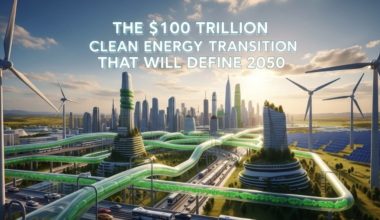
Why Urban Sustainability Is the Ultimate Real Estate and Community Investment
ACTIVITY 1: The Neighborhood Environmental Scorecard
Rate your neighborhood/city across these 10 environmental metrics (1-10 scale):
- Air Quality: ___ (10=pristine, 1=heavily polluted)
- Green Space Access: ___ (10=parks within 5 min walk, 1=no parks)
- Public Transit: ___ (10=excellent, 1=car-dependent)
- Bike Infrastructure: ___ (10=protected lanes everywhere, 1=none)
- Tree Canopy: ___ (10=40%+ coverage, 1=<5%)
- Renewable Energy: ___ (10=100% clean grid, 1=100% fossil)
- Recycling/Composting: ___ (10=comprehensive programs, 1=none)
- Water Management: ___ (10=rain gardens/green infra, 1=all pavement)
- Community Gardens: ___ (10=abundant access, 1=none)
- Climate Resilience: ___ (10=flood/heat prepared, 1=vulnerable)
YOUR NEIGHBORHOOD SCORE: ___ /100
Benchmarks:
- 80-100: Green city champion (Copenhagen, Singapore, Vancouver)
- 60-79: Above average (Portland, Austin, Stockholm)
- 40-59: Average (most cities globally)
- 20-39: Below average (needs major improvement)
- Under 20: Environmental crisis zone
Translation: Each 10-point improvement = 2-5% property value increase
Time to complete: 5 minutes
Cost: Free
What you learned: How green your neighborhood is and its property value potential
Here’s the urban reality: 55% of humanity lives in cities (rising to 68% by 2050). Cities consume 75% of resources and produce 75% of emissions. But cities also offer solution: Dense urban living can reduce per-capita environmental footprint by 50%+ versus suburban sprawl.
And here’s the opportunity: Green infrastructure investments return 10-25% property value gains. Urban trees increase property values 5-10%. LEED-certified buildings command 10% rent premiums and 8% higher sale prices. Sustainable transport saves residents €2,000-5,000 annually. Community gardens provide €1,000-2,500 value per member annually. And smart city technology enables 20-30% resource efficiency improvements.
Civic environmental action isn’t charity—it’s the highest-ROI real estate and community development strategy available.
The Value Proposition: Green Cities = Property Wealth
Urban Green Infrastructure ROI
Green Roofs: 4-5x Return on Investment
Green roofs cost €80-200 per square meter to install. They provide:
- Energy savings: 20-40% cooling cost reduction (€300-800 annually for average building)
- Roof lifespan extension: 2x longer than conventional roof (save €5,000-15,000 over 40 years)
- Stormwater management: Retain 50-80% of rainfall reducing flooding and infrastructure costs
- Property value increase: 5-10% premium (€15,000-30,000 on €300,000 building)
- Urban heat island reduction: Lower surrounding temperatures 1-3°C
Total ROI over 20 years: 400-500% (4-5x initial investment)
Cities leading green roof adoption: Stuttgart (Germany), Toronto (Canada), Singapore, Basel (Switzerland), Copenhagen (Denmark). All seeing property value benefits and improved urban livability.
Urban Trees: 5-10% Property Value Increase
Street trees cost €300-1,000 each to plant and establish. They provide:
- Property value boost: Homes near trees sell for 5-10% more (€15,000-30,000 premium on €300,000 home)
- Energy savings: €100-300 annually per home in cooling costs
- Air quality improvement: One tree removes 20-50 kg pollutants yearly
- Stormwater absorption: €50-150 annual value per tree in flood prevention
- Mental health benefits: Priceless (reduced stress, improved wellbeing)
Total ROI: 15-30x over tree lifetime (50-80 years)
Cities investing in urban forestry: Singapore (1M trees planted), Melbourne (doubling canopy by 2040), Los Angeles (90,000 trees target), London (planting 20,000 annually). All seeing property value appreciation in tree-rich neighborhoods.
LEED Buildings: 10% Rent Premium, 8% Higher Value
LEED (Leadership in Energy and Environmental Design) certification costs €10,000-100,000 depending on building size. Certified buildings show:
- Rent premiums: 10-15% higher rents
- Sale price premiums: 8-12% higher values
- Occupancy rates: 3-5% higher (faster filling, lower vacancy)
- Operating costs: 20-30% lower (energy, water, maintenance)
- Tenant quality: Better tenants willing to pay premium
For commercial building owner: Certification pays for itself in 2-5 years, then provides premium returns for building lifetime.
For homeowners: Green certification (LEED, Passive House, Net Zero) adds 5-15% to resale value immediately.
Sustainable Transport: €2,000-5,000 Annual Savings
Car ownership costs €5,000-10,000 annually (payment, insurance, gas, maintenance, parking). Cities with excellent public transit, bike infrastructure, and walkability enable car-free or car-light living saving residents €2,000-5,000 annually.
Property values reflect this: Transit-oriented development shows 10-25% price premiums. Bike-friendly neighborhoods command 5-15% premiums. Walkable urban areas outprice car-dependent suburbs.
Cities leading: Amsterdam (cycling paradise), Zurich (best public transit), Tokyo (walking/transit optimal), Copenhagen (bike infrastructure). All showing property value gains from sustainable transport investment.
The Pattern: Green urban infrastructure creates wealth for property owners and cost savings for residents.
ACTIVITY 2: The Green Infrastructure ROI Calculator
Calculate returns on urban green investments:
Scenario 1: Green Roof Installation Building size: ___ sq meters Installation cost @ €120/sq m: €___ Annual energy savings (25%): €___ Roof life extension value: €___ Stormwater management value: €___ Property value increase (7%): €___ 20-year ROI: ___% (target: 400-500%)
Scenario 2: Urban Tree Planting Initiative Number of trees: ___ Cost @ €500/tree: €___ Annual benefits per tree: €200 20-year benefits: €___ × ___ trees = €___ Property value increase: €___ ROI: ___ x (target: 15-30x)
Scenario 3: LEED Certification Certification cost: €___ Annual operating savings (25%): €___ Rent premium (10%): €___ extra annually Property value increase (8%): €___ Payback period: ___ years (target: 2-5)
Scenario 4: Community Garden Plot cost: €___ (usually city-subsidized) Member investment: €50-200 annually Food production value: €1,000-2,500 per member Community value: Priceless ROI: 500-1,000%+ annually
Time to complete: 20 minutes
Insight: Green infrastructure has higher ROI than most investments
Action: Advocate for green infrastructure in your community
The Technology Revolution: Smart Cities Going Green
Technology Enabling Urban Sustainability
1. Smart Grids and Energy Management
Smart grids optimize electricity distribution reducing waste by 20-30%. Enable demand response (shift usage to off-peak saving money). Integrate renewable energy sources seamlessly. And provide real-time usage data helping consumers reduce consumption 15-25%.
Cities deploying smart grids: Barcelona, Amsterdam, Singapore, San Diego, Stockholm. Results: 20-30% energy cost reductions, 30-40% renewable energy integration, improved grid reliability.
Investment opportunities: Smart grid technology companies (Schneider Electric, Siemens, GE), smart meter manufacturers, energy management software companies. Market growing 15% annually reaching €100+ billion by 2030.
2. Green Building Technology
Modern buildings integrate: Passive solar design (30-50% heating reduction), high-efficiency HVAC (40-60% energy savings), smart windows (tint automatically saving cooling), green walls and roofs (insulation + stormwater), Building Management Systems optimizing everything in real-time.
Result: Net-zero energy buildings (produce as much energy as consumed). Some even net-positive (produce excess energy selling back to grid).
Market: Green building technology €250 billion market growing 10% annually. Investment accessible through green building ETFs, construction technology companies, efficiency technology firms.
3. Sustainable Urban Mobility
Electric buses replacing diesel fleets (zero local emissions, 50-70% operating cost savings). Bike-share systems (10,000+ systems globally serving 100+ million users). EV charging infrastructure (500,000+ public charging points globally, growing 50% annually). Micro-mobility (e-scooters, e-bikes) complementing transit.
Cities leading: Oslo (electric public transport), Paris (bike lanes everywhere), Singapore (congestion pricing + transit), Bogotá (BRT system model for world).
Investment opportunities: EV charging companies (ChargePoint, EVgo), micro-mobility companies (Lime, Bird), transit technology companies. Market growing 20-30% annually.
4. Circular Economy Urban Systems
Cities implementing circular economy: Waste-to-energy plants (trash becomes electricity), composting programs (organic waste becomes fertilizer), material recovery facilities (high-value recycling), sharing economy platforms (reduce need for ownership).
Amsterdam, Copenhagen, San Francisco, Tokyo leading circular economy transformation. Results: 50-70% waste diversion from landfills, significant cost savings, job creation in recycling and remanufacturing.
Market: Circular economy €4.5 trillion global opportunity. Urban implementation creating hundreds of thousands of jobs and billions in economic value.
5. Nature-Based Solutions in Cities
Cities integrating nature: Rain gardens and bioswales (manage stormwater naturally), urban forests (cooling, air cleaning, mental health), green corridors (wildlife habitat connecting parks), living shorelines (coastal protection). These solutions often cheaper and more effective than traditional infrastructure.
Singapore, Melbourne, Portland, Barcelona investing billions in nature-based urban infrastructure. ROI: $3-7 per dollar invested in co-benefits (flood protection, cooling, air quality, property values).
ACTIVITY 3: The 30-Day Civic Environmental Challenge
Transform your community in 30 days:
Week 1: Personal Civic Action
- Day 1-2: Complete Activity 1 (score your neighborhood)
- Day 3-4: Contact city council about one environmental priority
- Day 5-7: Attend community meeting or join environmental group
Week 2: Home Green Upgrades
- Day 8-10: Plant native species, create wildlife habitat at home
- Day 11-13: Improve home efficiency (LED, insulation, weather-stripping)
- Day 14: Share home improvements with neighbors, inspire others
Week 3: Community Organizing
- Day 15-17: Organize neighborhood tree planting or park cleanup
- Day 18-20: Petition for bike lanes, transit improvements, or green space
- Day 21: Start or join community garden
Week 4: Amplification
- Day 22-24: Meet with local businesses about sustainability
- Day 25-27: Write letter to editor or post on social media about green city benefits
- Day 28-30: Plan long-term civic engagement, commit to ongoing action
Metrics to Track:
- Personal actions completed: ___
- People engaged/influenced: ___
- City officials contacted: ___
- Community improvements initiated: ___
- Expected property value impact: ___% increase
- Environmental benefit: CO₂ reduced, trees planted, etc.
Share progress: #GreenCityChallenge
Time commitment: 1-2 hours daily for 30 days
Financial investment: €50-500 depending on activities
ROI: 2-5% property value gain (€6K-15K on €300K property)
The Crisis Reality: Cities Are Choking on Their Own Emissions
Urban Environmental Justice Gap
Poor neighborhoods experience 35% more pollution than wealthy neighborhoods despite contributing less to emissions. This creates health disparities: Higher asthma rates (40% worse), cardiovascular disease (25% worse), heat-related illness (300% higher during heat waves).
Economic impact: Low-income residents pay €2,000-5,000 more annually in health costs from environmental factors. Property values suppressed 20-40% in polluted areas creating wealth gap. And climate disasters hit poor neighborhoods hardest (less infrastructure, less resources to recover).
Timeline: Gap widening as climate change intensifies without intervention to protect vulnerable communities.
Urban Heat Islands: 5-10°C Hotter Than Surroundings
Cities 5-10°C hotter than surrounding rural areas due to pavement, buildings, lack of trees. This kills: Heat waves cause thousands of excess deaths in cities globally (Chicago 1995: 700 deaths, Paris 2003: 15,000 deaths, India 2015: 2,500 deaths).
Economic cost: €10-30 billion annually in excess cooling costs, productivity loss, health impacts. And worsening as climate change makes heat waves more frequent and intense.
Solution: Urban greening reduces temperatures 2-5°C locally. Every 10% increase in tree canopy reduces temperatures 0.5-1°C. Cities investing in cooling infrastructure (green roofs, trees, light-colored surfaces, water features) protecting residents.
Resource Consumption and Waste
Cities consume 75% of resources and produce 75% of waste despite housing 55% of population. This creates: Massive waste management costs (€200-500 per ton), landfill space shortages, resource depletion, and emissions from waste.
But cities also offer efficiency: Dense urban living uses 50% less energy per capita than suburban sprawl. Shared infrastructure reduces resource needs. Public transit vastly more efficient than cars. Apartment living more efficient than detached houses.
Opportunity: Optimizing city resource use could reduce global consumption 30-40% while improving quality of life.
ACTIVITY 4: The Local Climate Action Strategy Builder
Create actionable climate plan for your community:
1. Assess Current State:
- Neighborhood environmental score (from Activity 1): ___/100
- Biggest weaknesses: ___, ___, ___
- Biggest opportunities: ___, ___, ___
2. Set Ambitious Goals (5 years):
- Target environmental score: ___/100 (improve 20-40 points)
- CO₂ reduction goal: ___%
- Property value increase goal: ___%
- Community engagement goal: ___ active participants
3. Priority Actions:
Quick Wins (0-6 months):
- Green infrastructure: ___ (trees, gardens, green roofs)
- Efficiency programs: ___ (LED, insulation subsidies)
- Community organizing: ___ (form environmental committee)
Medium-Term (6-18 months):
- Transit/bike infrastructure: ___ (new routes, protected lanes)
- Renewable energy: ___ (community solar, municipal clean energy)
- Waste reduction: ___ (composting, recycling programs)
Long-Term (18 months-5 years):
- Major infrastructure: ___ (stormwater management, district energy)
- Policy changes: ___ (building codes, zoning for density)
- Systemic transformation: ___ (circular economy, net-zero targets)
4. Funding Sources:
- Municipal budget allocation: €___
- Green bonds: €___
- State/federal grants: €___
- Private investment (property owners): €___
- Community fundraising: €___
5. Success Metrics:
- Trees planted: ___
- Bike lanes added: ___ km
- Buildings certified green: ___
- CO₂ reduced: ___ tons
- Property values increased: ___%
- Quality of life improved: Measured via resident surveys
Time to complete: 1-2 hours
Action: Present to city council, organize community support
Expected impact: Transform community over 5 years
The Business Opportunity: Green Cities Are Economic Boom
Where Urban Sustainability Money Flows
Green Building: €350 Billion Market
Sustainable construction, LEED certification, green retrofits all growing 10-12% annually. Opportunities: Green architects and engineers (€60K-120K), energy auditors (€40K-80K), building commissioners (€50K-100K), green real estate brokers (earn premiums on certified properties).
Urban Agriculture: €150 Billion Market
Rooftop farms, vertical farms, community gardens, urban greenhouses transforming cities. Companies like AeroFarms, Gotham Greens, Infarm raising hundreds of millions. Urban farms generating €40,000-160,000 per acre versus traditional agriculture €1,000-5,000 per acre.
Jobs: Urban farmers, agricultural technicians, food system designers. Growing rapidly in cities globally.
Sustainable Transport: €500 Billion Market
EV charging infrastructure, bike-share systems, electric buses, mobility-as-service platforms all exploding. Investment in urban mobility companies (Lime, Bird, etc.) exceeding billions annually.
Jobs: Transit planners (€50K-90K), EV infrastructure installers (€35K-60K), mobility analysts (€55K-100K).
Smart City Technology: €400 Billion by 2030
Sensors, data analytics, IoT platforms optimizing city operations. Market growing 20% annually as cities invest in efficiency.
Jobs: Smart city engineers (€60K-110K), data scientists (€70K-140K), urban technology consultants (€65K-120K).
ACTIVITY 5: The Civic Engagement Commitment Contract
Make official commitment to green city action:
I, _____________, commit to making my community more sustainable.
My Current Neighborhood Score: ___/100
My 1-Year Goal:
- Improve neighborhood score by: ___ points
- Lead/participate in: ___ green initiatives
- Influence: ___ neighbors/businesses to take action
- Expected property value impact: +___%
My Actions: Monthly: Attend city council/environmental meetings Quarterly: Organize community event (cleanup, planting, education) Annually: Lead major initiative (park improvement, bike lanes, green infrastructure)
My Accountability:
- Partner checking in: _______________
- Public commitment: Share on social media #GreenCityCommitment
- Progress updates: Monthly to community group
Why this matters to me: [Write personal reason – family, property value, quality of life, legacy]
Date: ______ Signature: ______
Time to complete: 10 minutes
Cost: Free
Impact: 2-5% property value increase + community transformation
The Bottom Line: Green Cities = Wealthy, Healthy, Thriving Communities
Cities are environmental problem (75% of emissions) and solution (efficiency potential saves planet). The question is: Will your city lead or lag?
The value propositions are compelling:
Green infrastructure: 10-25% property value gains. Urban trees: 5-10% premiums. LEED buildings: 10% rent premiums, 8% higher values. Sustainable transport: €2,000-5,000 annual savings. Community gardens: €1,000-2,500 value per member. Smart city tech: 20-30% resource efficiency. Green careers: €35K-140K salaries.
The crisis is real:
Cities consume 75% resources, produce 75% emissions. Urban heat islands killing thousands during heat waves. Environmental justice gap: poor neighborhoods 35% more pollution. Air quality below WHO standards in 92% of cities. Resource consumption unsustainable.
The opportunity is massive:
Green building: €350B market. Urban agriculture: €150B market. Sustainable transport: €500B market. Smart cities: €400B market. Every green investment creates jobs, increases property values, improves health, and reduces emissions.
Green cities offer highest quality of life, strongest property values, best economic opportunities. The transition is happening. Choose: Lead and prosper, or lag and decline.
🎉 CONGRATULATIONS! You’ve completed the entire ENVIRONMENT & NATURE series!
You now understand the six foundations of environmental action:
- Nature Conservation (protecting biodiversity)
- Environmental Economics (green investing)
- Marine (ocean health)
- Atmosphere (clean air and energy)
- Civic (sustainable cities)
The 2050 world will be green and thriving, or brown and dying. Your actions in your city determine which future we get.
Start today. Green your community. Build wealth through sustainability.
🌍🏙️🌱