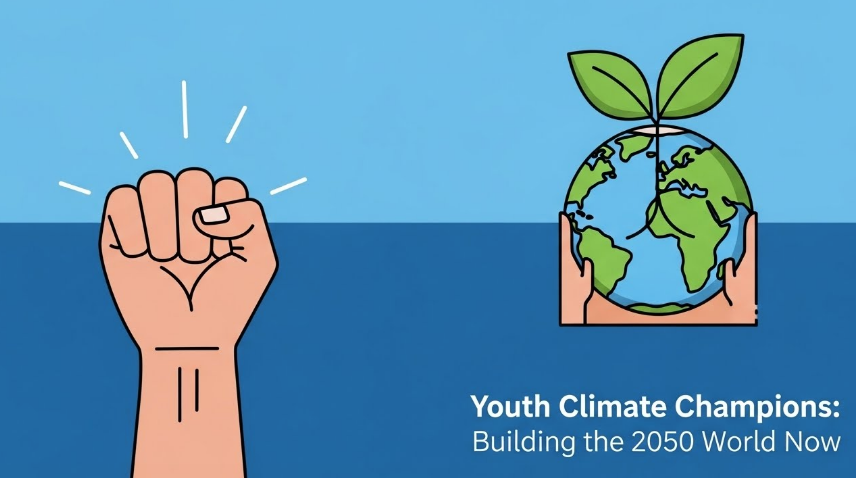
You’re Not Inheriting the Future—You’re Creating It
Let’s get one thing straight: You’re not “the leaders of tomorrow.”
You’re the leaders of TODAY. And the world you’re building right now will be the world you’ll live in for the next 50-70 years.
Here’s what nobody tells you: The decisions being made in 2026 about energy, infrastructure, and climate will determine what your life looks like in 2050. Buildings constructed now will still be standing. Power plants built today will still be running. Career paths chosen now will define your trajectory.
The people making those decisions? Many won’t even be alive in 2050. But you will be.
You’re 15-30 years old now. In 2050, you’ll be 39-54—in your absolute prime. You’ll be running companies, leading governments, raising families, and yes, dealing with whatever climate situation we create in the next 10 years.
So here’s the real question: Are you going to wait for someone else to build your future? Or are you going to build it yourself?
Why Youth Climate Champions Have the Most Power
You Have What Others Don’t:
1. The Longest Timeline
- You’ll live 50-70 more years
- You have the most to gain from success
- You have the most to lose from failure
- Your decisions compound over decades
2. The Moral Authority
- Nobody can say “you’re asking us to sacrifice”—YOU are the sacrifice if we fail
- Your voice carries weight because you inherit the consequences
- Adults can’t dismiss you without looking like monsters
- History sides with youth movements
3. The Digital Fluency
- You grew up with technology as a tool, not a mystery
- You can organize, mobilize, and amplify at scale
- You understand how to create viral movements
- You can build solutions others can’t imagine
4. The Adaptability
- You’re not locked into old industries and careers
- You can pivot to emerging opportunities
- You’re building skills for the future, not clinging to the past
- You’re comfortable with rapid change
5. The Numbers
- Under 30? You’re 50% of global population
- In many countries, you’re the largest voting bloc
- Your consumer preferences shape markets
- Your career choices determine which industries thrive
6. The Urgency
- You don’t have time for gradual change
- You demand action, not empty promises
- You’re willing to disrupt systems that aren’t working
- You’re not afraid to call out greenwashing BS
The Youth Climate Champion Opportunity
This Isn’t Just About “Saving the Planet”—It’s About Building Wealth, Skills, and the Life You Want
Career Opportunity:
- 38 million new clean energy jobs by 2030
- Climate tech startups raising billions in funding
- ESG analyst roles paying $80,000-150,000+ starting
- Renewable energy technicians earning $50,000-80,000 with no college degree
- Climate communications specialists in explosive demand
- Sustainability consultants billing $150-400/hour
- Green architects, engineers, designers commanding premium rates
Entrepreneurship Opportunity:
- Climate tech is hottest startup sector
- Investors pouring $300+ billion annually into climate solutions
- Youth-founded companies raising millions (Greta Thunberg effect)
- Problem-solving skills you build now = business opportunities later
- Every industry needs to transform = endless market opportunities
Skills Opportunity:
- Learn renewable energy system design
- Master carbon accounting and ESG analysis
- Build climate communication expertise
- Develop circular economy business models
- Understand climate policy and advocacy
- Create climate tech and apps
- Design sustainable systems
These aren’t “save the world” charity skills—they’re the most valuable career skills for the next 30 years.
The 6-Month Youth Climate Champion Challenge
Whether you’re in high school, college, or early career, here’s how to become a climate leader and build a portfolio that opens every door.
Month 1: Build Your Foundation
Week 1: Climate Literacy Sprint
Activity 1: Understand the Science (3 hours)
- Watch: IPCC explainer videos (YouTube)
- Read: “The Uninhabitable Earth” key excerpts or similar accessible science
- Take: Free online course (edX, Coursera have many)
- Goal: Be able to explain climate change clearly in 2 minutes
Activity 2: Learn the Solutions (3 hours)
- Explore: Project Drawdown solutions library
- Study: Which solutions have biggest impact
- Identify: Solutions relevant to your community/skills
- Goal: Know the top 10 climate solutions and how they work
Activity 3: Find Your Niche (2 hours)
- What problems in your community could you help solve?
- What skills do you have or want to build?
- What career paths interest you?
- Where’s the overlap?
- Goal: Identify your unique contribution angle
Example Niches:
- Tech-savvy? → Build climate apps and tools
- Creative? → Climate communication and storytelling
- Business-minded? → Green entrepreneurship
- Science-oriented? → Renewable energy systems
- Social? → Community organizing and advocacy
- Artistic? → Climate art and awareness campaigns
Week 2-4: Build Your First Project
Activity 4: Start Small, But Start (Choose ONE)
Option A: School/Campus Project
- Audit energy use in one building
- Start composting program
- Create bike-sharing system
- Launch meatless Monday campaign
- Build climate curriculum module
- Time: 10-15 hours over 3 weeks
- Deliverable: Working pilot with measured impact
Option B: Community Project
- Help local business reduce waste
- Organize neighborhood solar co-op
- Start community garden
- Create carpool/rideshare system for your area
- Launch local climate awareness campaign
- Time: 10-15 hours over 3 weeks
- Deliverable: Visible community improvement
Option C: Digital Project
- Build app for tracking personal carbon footprint
- Create social media campaign on specific solution
- Design infographics explaining climate science
- Start YouTube/TikTok channel on climate action
- Build website connecting youth climate activists
- Time: 10-15 hours over 3 weeks
- Deliverable: Live digital product with users
Document Everything:
- Take before/after photos
- Track metrics (energy saved, waste reduced, people reached)
- Collect testimonials
- Create case study
- Why: This becomes your portfolio piece
Month 2: Scale Your Impact
Activity 5: Build Your Team (Week 5-6)
You Can’t Do This Alone—Don’t Try:
Recruit Your Climate Crew (5-10 people):
- 1-2 tech people (build stuff)
- 1-2 communicators (tell the story)
- 1-2 organizers (mobilize people)
- 1-2 researchers (find solutions and data)
- 1-2 connectors (know everyone, open doors)
How to Recruit:
- Post on social media: “Starting climate project, need team”
- Reach out to friends with relevant skills
- Connect with school environmental clubs
- Join online youth climate communities
- Goal: 5 committed people meeting weekly
Team Setup:
- Weekly meetings (1 hour, same time)
- Shared group chat for coordination
- Shared folder for documents
- Clear roles and responsibilities
- Tool: Use free platforms (Discord, Slack, Google Workspace)
Activity 6: Choose Your Mission (Week 7-8)
Your Team Needs a Clear, Achievable Goal:
Mission Template: “We will [specific action] for [specific people] by [specific date] to achieve [specific outcome].”
Good Examples:
- “We will install solar on our school by June 2027 to reduce emissions 40% and save $50,000 annually.”
- “We will launch a local climate action app by December 2026 to connect 1,000 youth with green job opportunities.”
- “We will convert 3 city blocks to car-free zones by August 2026 to reduce local emissions 30% and improve air quality.”
Bad Examples:
- “We will save the planet” (too vague)
- “We will raise awareness” (awareness isn’t outcome)
- “We will try to help” (no concrete target)
Pick Your Level:
- Local: Transform your school, neighborhood, or small business district
- Digital: Build platform, app, or movement that scales online
- Advocacy: Win specific policy change at city or state level
- Innovation: Develop new solution to existing problem
Month 3-4: Execute Like Entrepreneurs
Activity 7: The 90-Day Sprint (Weeks 9-20)
Week-by-Week Execution:
Weeks 9-10: Planning Phase
- Break your mission into concrete tasks
- Assign responsibilities
- Set weekly milestones
- Identify resources needed (money, materials, permissions, partnerships)
- Deliverable: Detailed project plan with timeline
Weeks 11-14: Build Phase
- Execute your core project
- Meet challenges as they arise (they will)
- Pivot when needed (they need to)
- Document everything (photos, videos, metrics)
- Target: 60% of project completed
Weeks 15-18: Test & Improve Phase
- Launch beta version or pilot
- Get user feedback
- Fix problems
- Iterate rapidly
- Target: Working version with real users
Weeks 19-20: Scale & Share Phase
- Expand to more users/locations
- Create polished case study
- Share on social media
- Present to local media
- Pitch to city council/school board
- Target: Your project becomes model others can replicate
Activity 8: Build in Public
Document Your Journey (Weekly):
Social Media Updates:
- Monday: Challenge of the week
- Wednesday: Progress update with photos
- Friday: Win of the week (even small ones)
- Platforms: Instagram, TikTok, LinkedIn, Twitter
- Goal: Build following, inspire others, create accountability
Why This Matters:
- Your journey inspires others to start
- You build personal brand as climate leader
- Opportunities find you (they really do)
- You create evidence of your leadership
- Portfolio building happens automatically
Month 5: Measure & Amplify
Activity 9: Calculate Your Impact
Measure Everything:
- Carbon emissions reduced (tons CO₂)
- Money saved (dollars)
- People impacted (number)
- Jobs created (if applicable)
- Media coverage received
- Tool: Create simple dashboard tracking these metrics
Create Your Case Study:
- Problem: What issue did you address?
- Solution: What did you build/implement?
- Process: How did you do it?
- Results: What was the impact (with numbers)?
- Lessons: What would you do differently?
- Next Steps: How can others replicate this?
Format: 2-page document with photos, graphs, quotes
Why: This is your portfolio piece for college apps, job applications, grant proposals
Activity 10: Share Your Playbook
Make It Easy for Others to Replicate:
Create Step-by-Step Guide:
- Materials needed (with costs and sources)
- Timeline (realistic estimate)
- Common challenges (and solutions)
- Resources and contacts
- Templates and tools
- Format: Google Doc, Notion page, or simple website
Share Everywhere:
- Post to climate action forums
- Share with local schools/organizations
- Submit to climate network databases
- Present at local events
- Impact: Your one project becomes ten projects in other communities
Month 6: Career Building & Next Level
Activity 11: Turn Experience Into Opportunities
Update Your Application Materials:
Resume/CV:
- Add project with quantified impact
- List skills gained (project management, data analysis, team leadership, public speaking, etc.)
- Include media coverage if any
- Impact: You’re now a “climate leader” with proven results, not just “interested in environment”
College Applications:
- Your project becomes THE essay topic
- Demonstrated initiative, leadership, impact
- Concrete evidence of values in action
- Reality: Admissions officers see thousands of “I care about climate” essays. Yours has actual results.
Job Applications:
- Portfolio piece showing real-world problem-solving
- Evidence of skills employers want
- Demonstrates entrepreneurial mindset
- Shows ability to execute, not just talk
- Advantage: Most candidates have zero climate leadership experience
LinkedIn/Professional Profile:
- Add project as experience
- Connect with people you worked with
- Share your case study
- Network Effect: Climate professionals notice and reach out
Activity 12: Launch Your Next Project
You’re Not Done—You’re Just Getting Started:
Option 1: Scale Your Current Project
- 3 blocks car-free → entire neighborhood
- One school solar → district-wide program
- 1,000 app users → 10,000 users
Option 2: Start Something Bigger
- Your success = credibility for bigger ask
- Approach city government with formal proposal
- Partner with established organization for resources
- Apply for grants and funding
Option 3: Help Others Launch
- Mentor younger students
- Share your playbook with other communities
- Create training program
- Build network of youth climate leaders
Option 4: Go Professional
- Turn your project into a nonprofit
- Launch social enterprise business
- Get paid internship in climate sector
- Build career on foundation you’ve created
Real Youth Climate Champion Success Stories
Case Study 1: Xiuhtezcatl Martinez, 22, Environmental Activist & Hip-Hop Artist
What He Did:
- Started speaking at environmental events at age 6
- At 15, sued US government for failing to address climate change
- Used music to reach youth audiences
- Spoke at UN multiple times before age 18
Results:
- Founded Earth Guardians youth movement
- Reached millions through music and speaking
- Testified before Congress as teenager
- Book deal, TED talk, major media coverage
- Now professional climate communicator and artist
Key Lesson: “Find the intersection of your passion and purpose. I combined hip-hop with climate action—nobody else was doing that.”
Case Study 2: Kehkashan Basu, 22, UAE Youth Climate Champion
What She Did:
- Founded Green Hope Foundation at age 12
- Organized climate action campaigns across UAE
- Became youngest UN Environment Goodwill Ambassador at 16
- Led sustainability programs for schools and communities
Results:
- Green Hope now active in 10+ countries
- Reached 1 million+ youth with climate education
- Multiple international awards
- Regular speaker at global climate events
- Degree in environmental science, career in climate policy
Key Lesson: “Age is not a barrier. When you have a clear mission and show results, adults take you seriously.”
Case Study 3: Boyan Slat, 28, Founded The Ocean Cleanup at 18
What He Did:
- At 16, saw ocean plastic problem while diving
- At 18, designed ocean cleanup technology for TED talk
- Dropped out of college to work on project full-time
- Raised millions through crowdfunding and investors
Results:
- The Ocean Cleanup raised $30+ million
- Deployed working systems in Pacific Ocean
- Removed tons of plastic from oceans and rivers
- Massive team and growing organization
- Proof that youth can build real solutions to massive problems
Key Lesson: “Everyone said it couldn’t be done. But I just focused on the engineering and proving it could work.”
Case Study 4: Local Heroes – Youth Who Started Small
The Solar School Project, Phoenix AZ (High School Students)
- Students proposed solar for school
- Created business case showing 7-year payback
- Presented to school board
- Won approval and funding
- Now: School saves $80,000 annually, students learned renewable energy skills, several now working in solar industry
The Bike Share System, Portland ME (College Students)
- Started with 5 used bikes
- Created simple app for reservations
- Grew to 30 bikes across campus
- Reduced campus car traffic 15%
- Now: City adopted model for entire downtown
The Food Waste App, Boston MA (High School Student)
- Built app connecting restaurants with excess food to food banks
- Started in her neighborhood (10 restaurants)
- Saved 5 tons of food from landfill in first year
- Now: App used in 3 cities, being courted by food rescue organizations
Key Lesson: Start local, start small, but START.
The Climate Career Pathways for Youth
Hot Jobs You Can Prepare For NOW:
Renewable Energy Sector:
- Solar installer: $40,000-65,000, 2-week training program
- Wind turbine technician: $50,000-75,000, 2-year degree
- Energy auditor: $45,000-80,000, certification programs
- Solar sales: $60,000-120,000, no specific degree needed
- Renewable project developer: $75,000-150,000, engineering or business degree
- Pathway: Start with installer certification while in school, work summers, decide on further education
Sustainable Finance:
- ESG analyst: $60,000-120,000, finance degree
- Impact investment associate: $70,000-150,000, finance or economics degree
- Green bond specialist: $80,000-200,000, finance background
- Climate risk analyst: $75,000-140,000, finance + data science
- Pathway: Business or economics degree + climate focus + internships at sustainable finance firms
Climate Tech & Innovation:
- Climate app developer: $80,000-160,000, coding bootcamp or CS degree
- Carbon accounting software: $70,000-140,000, tech + accounting background
- Climate data scientist: $90,000-180,000, data science degree
- Clean tech engineer: $75,000-150,000, engineering degree
- Pathway: Learn to code now (free resources online), build climate projects, CS degree optional
Circular Economy & Sustainability:
- Sustainability consultant: $60,000-150,000, varies by path
- Circular economy designer: $65,000-120,000, industrial design or business
- Corporate sustainability manager: $80,000-150,000, business degree + experience
- Life cycle assessment specialist: $60,000-100,000, environmental science degree
- Pathway: Any degree + sustainability certification + project experience
Climate Communication & Advocacy:
- Climate journalist: $40,000-100,000, journalism degree
- Environmental communicator: $50,000-90,000, communications degree
- Climate campaign manager: $55,000-100,000, marketing or advocacy background
- Policy advocate: $50,000-120,000, political science or public policy
- Pathway: Communications or journalism degree + climate focus + portfolio of work
Emerging Roles (Didn’t Exist 10 Years Ago):
- Chief Sustainability Officer: $150,000-400,000+
- Carbon removal specialist: $80,000-150,000
- Regenerative agriculture advisor: $60,000-100,000
- Climate adaptation planner: $70,000-120,000
- Green hydrogen project manager: $90,000-160,000
The Pattern: Climate jobs pay well, grow fast, and can’t be outsourced (installing solar panels requires being physically present).
Youth Climate Action Toolkit
Free Learning Resources:
Online Courses:
- edX: Climate Change courses from top universities (free to audit)
- Coursera: Renewable Energy & Sustainability courses
- Khan Academy: Environmental science basics
- Project Drawdown: Solution database and resources
Skills Building:
- Codecademy: Learn programming for free
- YouTube: Tutorials on everything from solar installation to video editing
- Canva: Free graphic design for campaigns
- Google Digital Garage: Digital marketing skills
Organizing Tools:
- Action Network: Free organizing platform
- Mobilize: Event organizing
- Discord/Slack: Team communication
- Trello/Notion: Project management
Funding Your Project:
Micro-Grants ($500-5,000):
- Youth Service America grants
- Local community foundation youth grants
- Patagonia Youth Action Fund
- Environmental grants from local businesses
Crowdfunding:
- GoFundMe for community projects
- Kickstarter for products/innovations
- Indiegogo for technology projects
- Tip: Great video + clear impact = successful campaign
School/University Funding:
- Student government grants
- Department funding for research
- Sustainability office budgets
- Alumni donation programs
Competitions:
- Conrad Challenge ($100,000 in prizes)
- Google Science Fair
- Diamond Challenge ($25,000 top prize)
- Climate tech pitch competitions
The Reality Check: Challenges You’ll Face
What Will Try to Stop You:
1. “You’re Too Young”
- Reality: Greta Thunberg started at 15. Boyan Slat at 18.
- Response: “Judge me on results, not age.”
- Strategy: Let your work speak. Numbers don’t lie.
2. “That’s Not Realistic”
- Reality: Everything is impossible until someone does it.
- Response: “Here’s my plan and budget. What specifically concerns you?”
- Strategy: Do your homework. Have answers ready.
3. “We Don’t Have Money/Time/Resources”
- Reality: Start with what you have, prove concept, then scale.
- Response: “This pilot costs $500 and 10 hours. Let’s test it.”
- Strategy: Quick wins build credibility for bigger asks.
4. Adults Who Don’t Take You Seriously
- Reality: Some adults are threatened by young people with conviction.
- Response: Find different adults. They exist.
- Strategy: Focus on allies, ignore naysayers.
5. Your Own Doubt
- Reality: Everyone doubts themselves. Successful people do it anyway.
- Response: “I don’t need to be perfect. I just need to start.”
- Strategy: Set small milestones. Celebrate wins. Build confidence.
6. Burnout
- Reality: Climate work is emotionally exhausting.
- Response: “This is a marathon, not a sprint. I need sustainable pace.”
- Strategy: Build team so you’re not alone. Take breaks. Remember why you started.
Your First Steps (This Week)
Day 1: Calculate your carbon footprint Day 2: Take one 3-hour online course on climate solutions Day 3: Identify one problem you could help solve Day 4: Draft a project idea (1 page) Day 5: Share with 3 friends who might join you Day 6: Refine idea based on feedback Day 7: Take first action toward project
That’s it. Just 7 days to go from “I wish I could do something” to “I’m doing something.”
The Bottom Line
You have something no one else has: TIME.
Not time to waste—time to build.
The decisions being made in 2026-2030 will determine what your life looks like in 2050. You can let other people make those decisions for you, or you can take control and build the future you want to live in.
Every youth climate champion started exactly where you are: zero experience, uncertain how to start, not sure if they could make a difference.
The difference between them and everyone else? They started anyway.
Climate action isn’t your hobby. It’s your career prep, your portfolio building, your skill development, and your chance to shape the world you’ll live in for the next 50 years.
The 2050 world you’ll live in? You’re building it right now.
So the question is: What are you building?
Ready to see how entire communities transform together? Check out Local Climate Action to see the bigger picture beyond individual and youth leadership.