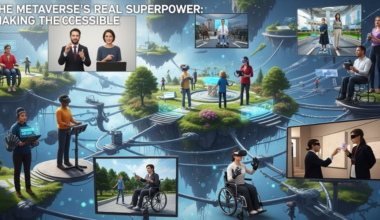
Here’s what most people miss about the metaverse: while adults debate whether it will happen, young people are already there. They’re not waiting for Meta to finish building Horizon Worlds or for Apple to perfect their next headset. They’re creating their own version right now, using whatever tools they can find.
And they’re showing us exactly what the metaverse of 2050 will actually look like.
The Numbers That Tell the Real Story
Let’s start with facts that should make everyone pay attention. As of 2025, the metaverse has over 600 million active users worldwide. Here’s the part that matters: 80% of them are under 16 years old. Let me repeat that because it’s crucial: four out of five people actively using metaverse platforms right now are children and teenagers.
More specifically, 51% of all metaverse users are 13 or younger. These aren’t casual visitors. These aren’t people trying it once out of curiosity. These are regular, active users who consider virtual spaces a normal part of their daily lives.
This isn’t the future. This is happening right now, in 2026.
What Young People Are Actually Doing in the Metaverse
Forget the corporate presentations about virtual meetings and digital shopping. That’s not what’s driving 600 million young users. Here’s what they’re actually doing:
Creating and Building
Young people aren’t just consuming content in virtual worlds. They’re building it. On platforms like Roblox with 214 million monthly users and Minecraft with 166 million, youth aren’t players in someone else’s game. They’re designers, architects, programmers, and entrepreneurs.
A 15-year-old can learn 3D modeling by building structures in Minecraft. A 17-year-old can learn game design by creating experiences in Roblox. A 14-year-old can learn economics by running a virtual business. They’re gaining real skills while doing something they consider fun.
Thomas Sulikowski started a Minecraft design studio at age 20, charging up to $90,000 for custom work. He learned everything he needed not in a classroom but by building in virtual worlds as a teenager.
Socializing Differently
For young people, virtual spaces aren’t separate from real life. They’re part of real life. When a Gen Z person hangs out with friends in Fortnite, that’s not “less real” than hanging out at a mall. It’s just a different location.
Research from 2024 shows that Gen Z already spends significant time socializing in digital spaces, and many report feeling more authentic in virtual environments than physical ones. One study found that 52% of Gen Z gamers feel more like themselves in the metaverse than in real life.
Think about that. For many young people, their avatar isn’t a mask hiding who they really are. It’s a tool allowing them to express who they really are without the constraints and judgments of physical appearance, geography, or social anxiety.
Learning and Exploring
The metaverse is becoming an educational space whether traditional educators like it or not. Students use virtual worlds for collaborative projects, exploring historical environments, conducting science experiments that would be impossible or dangerous in physical labs, and connecting with peers globally.
Metaverse-based science learning platforms offer immersive and interactive experiences that enhance understanding of complex concepts. Students can explore inside a cell, walk through the solar system, witness historical events, or conduct chemistry experiments without expensive lab equipment.
The geographic limitations that traditionally defined education are disappearing. A student in rural Vietnam can collaborate with a student in urban Brazil on a project set in ancient Rome, all without leaving their homes.
Expressing Identity and Finding Community
For many young people, especially those who feel marginalized or different in their physical communities, the metaverse offers something invaluable: the ability to find others like them and to express themselves authentically.
LGBTQ+ youth who face discrimination in their schools or neighborhoods can find supportive communities in virtual spaces. Neurodivergent individuals who struggle with physical social cues can communicate more comfortably through avatars. Those with disabilities that limit physical mobility can participate fully in activities that exclude them in the physical world.
The metaverse isn’t replacing their real lives. It’s supplementing them, providing access to community and self-expression that the physical world often denies them.
Experimenting with Economics
Young people are learning about economics, entrepreneurship, and digital ownership through metaverse platforms. They’re creating and selling digital goods, learning about supply and demand, experiencing how markets work, and even engaging with cryptocurrency and blockchain concepts.
Some are making real money. While adults debate the validity of digital assets, teenagers are earning income by designing avatar clothing, creating virtual experiences, trading digital items, and building businesses entirely within virtual economies.
They’re learning financial literacy not from textbooks but from actual participation in digital economies.
What Drives Young People to the Metaverse?
Research from 2024 and 2025 identifies several key motivations for why Generation Z engages with virtual worlds:
Hedonic Needs Outweigh Cognitive Ones
Young people engage with the metaverse primarily for enjoyment and pleasure rather than for purely functional purposes. They’re not there because it’s useful. They’re there because it’s fun and meaningful.
This includes entertainment through gaming and experiences, emotional satisfaction from social connections, creative expression through building and customization, and the excitement of exploring new environments.
Fear of Missing Out (FOMO)
For many young people, especially Gen Y millennials, FOMO significantly influences their engagement with the metaverse. Their peers are there, interesting things are happening, communities are forming, and they don’t want to be left out.
This isn’t trivial or superficial. Humans are social beings. The fear of being excluded from where social interaction happens is a legitimate driver of behavior.
Self-Extension and Identity Expression
The metaverse allows young people to extend and express their identity in ways the physical world doesn’t permit. Through avatar customization, they experiment with different appearances and presentations, express aspects of their personality they can’t show physically, and explore who they might want to become.
Research shows that symbolic gratification through self-expression is a major mediator of engagement with the metaverse for young users.
Status-Seeking and Innovation
Young people are motivated by being early adopters of new technology, owning rare or exclusive digital items, achieving recognition within virtual communities, and being part of something new and cutting-edge.
The metaverse offers status opportunities that differ from traditional physical world hierarchies.
The Challenges Young People Face
It’s not all positive. Young people encounter significant barriers and problems in metaverse spaces:
Privacy and Safety Concerns
Metaverse platforms collect extensive biometric data including eye tracking, emotional responses through facial recognition, movement patterns, social interactions, and behavioral data.
For young users, this raises serious concerns about data misuse, surveillance, lack of control over personal information, and potential for manipulation.
Sexual harassment and abuse are documented problems in virtual worlds. Female players report frequent harassment in spaces where embodiment makes threats feel more real than in traditional online spaces. The metaverse needs robust safeguarding measures specifically designed for young users.
The Digital Divide
Access to the metaverse requires expensive hardware like VR headsets ranging from $500 to $3,500, reliable high-speed internet connections, devices capable of running demanding software, and physical space to use VR equipment safely.
Many young people, particularly those from low-income families or rural areas, simply cannot access these technologies. This creates a two-tier system where wealthier youth gain early experience and skills while others are excluded.
Complexity and User Experience
Many young people cite the complexity of metaverse platforms as a barrier. The learning curve can be steep, interfaces are often unintuitive, technical difficulties are frustrating, and the overall experience can feel unpolished and buggy.
When platforms are hard to use, young people abandon them quickly. They have endless other options for their attention.
Perceived Usefulness vs. Hype
Research from 2024 shows that while young people are curious about the metaverse, many remain skeptical about its actual usefulness. Some key concerns include questioning whether virtual interactions are truly meaningful, doubting the practical applications beyond gaming, worrying about addiction and excessive screen time, and being cynical about corporate motivations.
Interestingly, one study found that increasing perceived usefulness can actually reduce positive attitudes toward the metaverse among some young users, suggesting a complex relationship between practical benefits and enjoyment.
Psychological Barriers
Young people experience psychological resistance to metaverse adoption including technology-induced anxiety from overwhelming new systems, perceived complexity and burden, privacy concerns creating distrust, and pressure to constantly engage and be present.
Generation Z, despite being digital natives, shows surprising resistance and indifference to certain metaverse platforms. They’re selective and critical, not automatically enthusiastic about every new technology.
The Gender Dimension
Research reveals important gender differences in how young people engage with the metaverse:
Male users currently comprise 59% of metaverse gamers, while female users represent 41%. But the differences go deeper than participation rates.
Female users show greater concern about avatar interaction and embodiment, place higher value on safeguarding measures, report more experiences of harassment, and have different preferences for virtual environment design.
These differences matter for platform design. Metaverse spaces built primarily by male developers with male users in mind will fail to adequately serve female users, perpetuating exclusion rather than creating inclusion.
What Young People Want (That Platforms Often Don’t Provide)
Based on extensive research into youth engagement with the metaverse, here’s what young users actually want:
Meaningful Social Connection
Young people don’t want more technology. They want better ways to connect with other humans. The metaverse needs to facilitate genuine relationships, support existing friendships across distances, enable new friendships based on shared interests, and create spaces where people feel they belong.
Platforms that prioritize monetization over community consistently fail to retain young users.
Creative Freedom
Young users want extensive customization options for their avatars and spaces, tools to build and create their own content, ability to express their identity authentically, and minimal restrictions on imagination.
Walled gardens with limited options bore them quickly.
Accessibility and Ease of Use
The metaverse needs to work on devices young people already own, not require expensive specialized hardware, have intuitive interfaces that don’t require extensive tutorials, run reliably without constant crashes or bugs, and allow quick entry and exit rather than demanding extended sessions.
If it’s not easy to use, young people won’t use it. They have too many other options.
Safety Without Surveillance
Young people want protection from harassment and abuse, control over who can interact with them, ability to report and block problematic users, and transparent privacy policies with actual control over their data.
But they don’t want overreaching surveillance, adults controlling every interaction, systems that assume they’re incapable of judgment, or technologies that treat them as products to be monitored and monetized.
Finding this balance is critical.
Authenticity Over Corporate Control
Young people are deeply skeptical of corporate-controlled metaverse platforms. They prefer spaces that feel authentic and community-driven over obviously commercial environments, platforms where users have real influence over rules and development, economic models that benefit creators not just platforms, and experiences that respect them as people rather than treating them as consumers or products.
This is why decentralized platforms, despite their technical limitations, appeal to many young users. They offer the promise of community ownership rather than corporate control.
How Education Is Adapting (Slowly)
Educational institutions are beginning to recognize the metaverse’s potential for teaching and learning:
Virtual Classrooms and Campuses
Universities are experimenting with persistent virtual spaces where students can gather, collaborate on projects, attend lectures and seminars, and access resources and services.
The COVID-19 pandemic accelerated this adoption significantly. Many institutions that dismissed virtual learning before 2020 now see it as essential infrastructure.
Immersive Learning Experiences
Educators use metaverse platforms for virtual field trips to historical sites or distant locations, science labs where students conduct experiments safely, language learning through immersion in virtual environments, and skills training in simulated professional settings.
For project management courses, students use metaverse platforms to collaborate on virtual projects, experiencing distributed teamwork firsthand. For medical training, students practice procedures in virtual operating rooms before touching real patients.
Global Collaboration
The metaverse enables students from different countries and cultures to work together seamlessly, breaking down geographic barriers to education and fostering global perspectives.
Students in Vietnam can collaborate with students in Brazil, mentored by professors in the US, all in the same virtual classroom at the same time.
Challenges in Educational Adoption
Educational institutions face significant barriers including resistance from traditional educators, lack of training for teachers, concerns about equity and access, difficulty assessing learning outcomes, and uncertainty about long-term effectiveness.
Many educators who grew up without this technology struggle to understand how to use it effectively. Professional development and support are essential but often lacking.
The Dark Side: Real Concerns
We need to be honest about the genuine problems young people face in metaverse spaces:
Addiction and Overuse
The metaverse is designed to be engaging. Sometimes too engaging. Young people can lose track of time, neglect physical world responsibilities, develop unhealthy usage patterns, and experience withdrawal symptoms when not connected.
Platform designers intentionally create experiences that maximize engagement and time spent, using psychological techniques that can be manipulative. This isn’t accidental. It’s the business model.
Impact on Physical Health
Extended VR use can cause eye strain and vision problems, headaches and nausea, reduced physical activity, poor posture and musculoskeletal issues, and disrupted sleep patterns.
Young people’s bodies and brains are still developing. The long-term health impacts of heavy metaverse use are largely unknown.
Social Development Concerns
There are legitimate questions about whether heavy metaverse use affects young people’s ability to navigate physical world social situations, develop non-verbal communication skills, form deep personal relationships, and handle conflict and discomfort.
Virtual interaction isn’t inherently worse than physical interaction, but it is different. Young people need experience with both.
Mental Health Impacts
Research shows mixed effects on mental health. Virtual communities can provide valuable support and reduce isolation. But they can also amplify social comparison, create new forms of bullying and harassment, enable avoidance of addressing real-world problems, and contribute to anxiety and depression in vulnerable individuals.
The relationship between metaverse use and mental health is complex and depends heavily on how, why, and how much young people engage.
What Happens by 2050?
Based on current trends and research, here’s what we can expect for youth and the metaverse over the next 25 years:
Phase 1: 2026-2030 – The Foundation Years
Generation Alpha (born 2010-2024) grows up with metaverse platforms as normal infrastructure, just as Millennials grew up with the internet and Gen Z grew up with smartphones. The distinction between physical and digital life continues to blur for young people. Educational institutions widely adopt metaverse tools for certain subjects and activities. Early career workers (current Gen Z) bring metaverse fluency into professional environments.
By 2030, the percentage of young people who regularly use some form of metaverse platform is expected to reach 50-60% in developed nations, up from current estimates around 25-30%.
Phase 2: 2030-2040 – Mass Adoption
The metaverse becomes standard infrastructure for youth culture, education, and early career development. Virtual experiences are seamlessly integrated with physical ones. Hardware becomes affordable and accessible enough for widespread adoption. Interoperability allows young people to maintain consistent identities and assets across platforms.
The distinction between “online” and “offline” becomes largely meaningless for younger generations. They exist in a hybrid reality where digital and physical are equally real.
Phase 3: 2040-2050 – The New Normal
Young people in 2050 will never remember a world without ubiquitous virtual spaces. For them, the question won’t be “should I use the metaverse?” but rather “which metaverse spaces best serve my needs right now?”
Education, socialization, career development, creative expression, and community building will all naturally incorporate metaverse elements. It won’t be special or novel. It will just be how things work.
The Youth Perspective: What They’re Telling Us
When researchers actually ask young people about their metaverse experiences and desires, some consistent themes emerge:
“We Want It to Feel Real”
Young users consistently emphasize that good metaverse experiences feel emotionally real even when they’re not physically real. The friendships matter. The creative accomplishments matter. The communities matter. Young people reject the framing that virtual experiences are inherently less valuable than physical ones.
“Stop Trying to Control Us”
Young users resist platforms that feel overly controlled by adults or corporations. They want agency, autonomy, the ability to shape their own experiences, and trust that they can handle themselves.
Overprotective design that assumes young people are incapable tends to drive them away from official platforms toward less regulated alternatives.
“Make It Easy or We Won’t Bother”
Young people have countless options for their attention and time. If a metaverse platform is difficult, buggy, or requires too much effort to use, they’ll simply go elsewhere. The bar for user experience is extremely high.
“We Care About Our Data”
Despite stereotypes about young people not caring about privacy, research shows they’re actually quite concerned about how their data is collected and used. They want transparency, control, and respect.
When platforms abuse their trust, young users abandon them quickly.
“We’re Not Just Consumers”
Young people reject being treated purely as consumers or products. They want to be creators, participants, and stakeholders. Platforms that enable meaningful contribution and ownership retain users. Those that extract value without giving back lose them.
What This Means for the Metaverse of 2050
Young people today are prototyping the metaverse of tomorrow. The patterns they establish, the platforms they embrace, the norms they create, and the demands they make will shape what the metaverse becomes.
By 2050, the metaverse won’t look like what Meta or Apple or any corporation is currently building. It will look like what today’s young people are building with the tools they have available.
It will be more social than commercial. More creative than consumptive. More community-driven than corporate-controlled. More about connection than monetization.
Or it will fail.
Because the young people who comprise 80% of current users won’t accept anything less. They’re not passive recipients of whatever technology companies decide to build. They’re active participants shaping what gets built based on their choices, preferences, and values.
The Bottom Line: Listen to Them
If you want to understand what the metaverse will become, don’t listen to tech CEOs giving presentations. Listen to the 14-year-old building worlds in Minecraft. Watch the 16-year-old connecting with friends across three continents in Roblox. Pay attention to the 19-year-old creating a business selling digital fashion.
They’re not the future users of the metaverse. They’re the current users. And they’re showing us exactly what works, what doesn’t, and what actually matters.
The metaverse of 2050 will be built by people who are teenagers right now. The values they hold, the communities they create, the norms they establish, and the expectations they demand will determine whether the metaverse becomes a transformative tool for human connection and creativity or just another failed tech fad.
Smart companies, educators, and policymakers are paying attention. They’re not trying to build the metaverse for young people. They’re trying to build it with them.
Because the youth aren’t waiting for permission to live in the metaverse. They’re already there. They’re already building. And they’re already showing us the way forward.
All we have to do is watch and listen.